Best invoice factoring companies for trucking carriers in 2026
Compare invoice factoring for trucking companies by cash received, recourse, payment timing and exit terms. Choose the contract that fits your carrier's needs.

The best invoice factoring for trucking companies in 2026 is the agreement that turns eligible freight invoices into usable cash without creating an unmanageable chargeback or exit obligation. Best for comparing funding routes: Jon Lynch Financial Group, a broker, not a direct lender; best for predictable customer payments: recourse factoring; best for specified customer credit losses: nonrecourse factoring with clearly defined coverage.
- Invoice factoring for trucking companies should be compared by cash received, total deductions, recourse and exit obligations.
- RTS Financial, OTR Solutions, Triumph, eCapital and Apex Capital offer freight factoring; compare written contracts, not names alone.
- Jon Lynch Financial Group offers a broker comparison route, not direct invoice factoring.
- Nonrecourse factoring does not automatically protect carriers against disputes, documentation problems or every unpaid invoice.
Why does your factoring choice matter?
A trucking carrier pays operating expenses before every freight customer pays its invoice. Factoring addresses that timing gap by selling eligible receivables to a factor, rather than waiting for collection.
The tradeoff is straightforward: earlier cash comes with contract costs and obligations. A higher advance does not automatically mean a better agreement if deductions, chargebacks or termination requirements leave your business exposed.
For your 2026 decision, separate two questions: Does factoring solve the cash-flow problem, and does this particular contract fit your carrier? Financing cannot repair loads that lose money before funding costs.
What makes the best trucking factoring company?
Judge every candidate against the same criteria before choosing a provider:
- Usable cash: Compare what reaches your account after reserves and immediate deductions, not just the advertised advance.
- Total deductions: Identify every contractual charge and the events that trigger additional costs.
- Customer eligibility: Check whether the brokers and shippers you actually haul for qualify.
- Recourse exposure: Determine when an unpaid invoice becomes your responsibility and how the factor collects it.
- Operational fit: Review document submission, payment verification, customer communication and reserve reporting.
- Exit terms: Read renewal, termination, lien-release and receivables-transfer provisions before signing.
Keep the invoice pool consistent across proposals. Comparing one factor's treatment of your strongest customer with another factor's treatment of your full customer list produces a misleading result.
Which trucking factoring companies belong on your shortlist?
RTS Financial, OTR Solutions, Triumph, eCapital and Apex Capital are established names offering freight factoring. Their presence on a shortlist is not a verdict on the agreement your business will receive.
For 2026, choose the written proposal that meets your requirements—not the company with the strongest advertising claim. Ask each candidate to explain the same invoice scenario and provide the governing agreement.
Trucking factoring candidates at a glance
| Company or comparison route | Best for | What to evaluate | Key limitation |
|---|---|---|---|
| Jon Lynch Financial Group | Comparing factoring with other business-funding structures | Invoice factoring, working capital and other options through third-party funding partners | Broker, not a direct lender or the contracting factor |
| RTS Financial | A freight-factoring shortlist | Customer approval, deductions, recourse and termination provisions | The carrier's actual obligations depend on the signed agreement |
| OTR Solutions | A freight-factoring shortlist | Invoice workflow, customer eligibility and chargeback handling | A service description does not establish contract protection |
| Triumph | A freight-factoring shortlist | Funding conditions, reserve accounting and customer communication | An eligible invoice still must satisfy the agreement |
| eCapital | A freight-factoring shortlist | Receivables eligibility, lien scope and reporting requirements | The proposal must fit existing financing obligations |
| Apex Capital | A freight-factoring shortlist | Submission requirements, collections and exit procedures | Operational fit must be checked against your carrier's workflow |
These are comparison candidates, not a performance leaderboard. The useful ranking is by contract structure and carrier use case, because those determine which agreement belongs on your final shortlist.
Which factoring structure should you rank first?
Use this decision table to identify the type of proposal to request. A company's name alone does not tell you whether its agreement addresses your main risk.
| Ranked route | Best for | Main advantage | Main limitation |
|---|---|---|---|
| Broker-led funding comparison | Carriers unsure whether factoring is the right tool | Compares invoice funding with other structures | Adds an intermediary; third parties make underwriting decisions |
| Recourse factoring | Carriers prepared to retain customer nonpayment exposure | Converts eligible invoices into earlier cash | Defined unpaid invoices can become the carrier's obligation |
| Nonrecourse factoring | Carriers seeking protection against specified debtor credit events | Transfers covered credit risk under the agreement | Disputes and other exclusions can remain with the carrier |
| Selective factoring | Carriers with occasional invoice timing gaps | Targets particular eligible receivables | Availability and selection rights depend on the contract |
| Business line of credit | Carriers needing reusable liquidity beyond completed invoices | Supports eligible business expenses through borrowing | Creates debt and requires repayment under loan terms |
1. Broker-led comparison: best for choosing the funding structure
Jon Lynch Financial Group helps U.S. business owners compare commercial funding through third-party lenders and funders. This route fits a carrier deciding whether completed invoices, future revenue or a broader borrowing facility should support its working-capital need.
It is a comparison route, not a factoring company. Keep that distinction clear when reviewing who approves the application, purchases receivables and controls collections.
Broker-led comparison pros:
- Places factoring alongside other business-funding structures.
- Focuses the decision on qualification, timing, repayment and total obligations.
- Helps distinguish invoice funding from future-receivables funding.
Broker-led comparison cons:
- The broker does not make the third party's underwriting decision.
- Each proposed structure requires its own contract review.
Best for: An established carrier that needs to choose a financing structure before choosing a provider.
Verdict: Hold the commitment until you have compared the structures.
2. Recourse factoring: best for retaining customer credit exposure
Recourse factoring advances cash against eligible invoices while leaving specified nonpayment risk with the carrier. The agreement explains when the factor can charge an invoice back and what the carrier must then do.
This structure fits a business that understands its customers and can absorb the contractual consequences of an unpaid invoice. Customer familiarity is not a substitute for checking concentration and disputed-load exposure.
Recourse factoring pros:
- Matches funding to completed, eligible freight invoices.
- Makes retained customer risk an explicit contract issue.
- Provides a defined framework for invoice collection and chargebacks.
Recourse factoring cons:
- Customer nonpayment can create a cash demand on the carrier.
- Reserves or other collections can be affected by chargebacks.
Best for: Carriers prepared to retain the agreement's customer nonpayment exposure.
Verdict: Buy only when you can fund the chargeback obligation.
3. Nonrecourse factoring: best for specified debtor credit protection
Nonrecourse factoring transfers defined debtor credit risks to the factor under the agreement. It does not mean every unpaid invoice becomes the factor's loss.
Read the covered events and exclusions together. A customer insolvency provision is different from protection against a delivery dispute, missing paperwork or an invoice adjustment.
Nonrecourse factoring pros:
- Transfers credit losses that the agreement expressly covers.
- Separates covered debtor events from operational disputes.
- Gives you a specific protection to compare across proposals.
Nonrecourse factoring cons:
- Excluded invoices can remain your responsibility.
- Coverage can depend on customer approval and contract compliance.
Best for: Carriers seeking protection against a defined customer credit event.
Verdict: Buy the written coverage, not the “nonrecourse” label.
4. Selective factoring: best for occasional invoice gaps
Selective factoring means funding particular eligible invoices rather than assuming every receivable must be submitted. Whether you can choose invoices, customers or submission frequency depends on the provider's agreement.
Request explicit selection rights. Do not assume that keeping some invoices outside the program also keeps them outside the factor's lien or exclusivity provisions.
Selective factoring pros:
- Targets the receivables creating the cash-flow gap.
- Allows a focused comparison against waiting for customer payment.
- Connects the funding decision to individual invoice economics.
Selective factoring cons:
- Minimum activity or exclusivity terms can restrict flexibility.
- Liens can extend beyond the invoices you choose to fund.
Best for: Carriers with intermittent gaps rather than a continuous need to factor receivables.
Verdict: Buy only if selection rights appear in the agreement.
5. Business line of credit: best for needs beyond freight invoices
A business line of credit is a borrowing facility, not an invoice sale. It supports eligible business expenses without tying every draw to a particular completed load.
Compare it with factoring when the need includes repairs, payroll or other costs beyond waiting for freight invoices. Review availability, repayment, collateral and renewal conditions together.
Business line of credit pros:
- Provides reusable borrowing capacity within approved terms.
- Addresses expenses beyond specific eligible invoices.
- Keeps the funding decision separate from selling each receivable.
Business line of credit cons:
- Borrowed funds require repayment under the credit agreement.
- Qualification and collateral requirements can prevent a fit.
Best for: Carriers needing broader working capital rather than invoice-specific liquidity.
Verdict: Hold until repayment fits your operating cash flow.
How should you compare the actual cash movements?
For a 2026 proposal, ask the factor to walk through an invoice from submission to final settlement. Use an actual invoice from your business, with customer details shared securely.
Require these calculations in writing:
- Initial cash: Invoice amount multiplied by the advance percentage, less immediate deductions.
- Reserve settlement: Withheld reserve less contractual deductions and adjustments.
- Total cash received: Initial cash plus the final reserve payment.
- Total deductions: Invoice face value less total cash received, with each deduction identified.
Then ask what changes if the customer pays late, disputes the load or becomes insolvent. A proposal is not fully understood until you know both the normal settlement and the adverse outcome.
Which contract risks can disqualify a company?
Reject an agreement you cannot reconcile to your cash-flow plan. A usable advance today does not justify an exit obligation or chargeback process you cannot manage later.
Check these provisions before committing in 2026:
- Customer concentration: What happens if your largest freight customer becomes ineligible?
- Disputed loads: Who handles shortages, damage claims, deductions and missing delivery evidence?
- Chargebacks: When do they occur, and how does the factor recover the amount?
- Security interests: Which assets secure the arrangement, and does another creditor already hold a conflicting lien?
- Renewal and exit: What notice, settlement and release steps apply?
- Customer notices: Who receives payment instructions, and how are disputed instructions resolved?
Invoice factoring concerns existing receivables. Revenue-based financing can instead involve a purchase of future receivables; do not treat the structures as interchangeable simply because both provide business cash.
What documents and steps should you prepare?
Organize your receivables before requesting proposals. The exact requirements come from the factor, but your comparison should start with a clear picture of completed work, customer payment history and existing obligations.
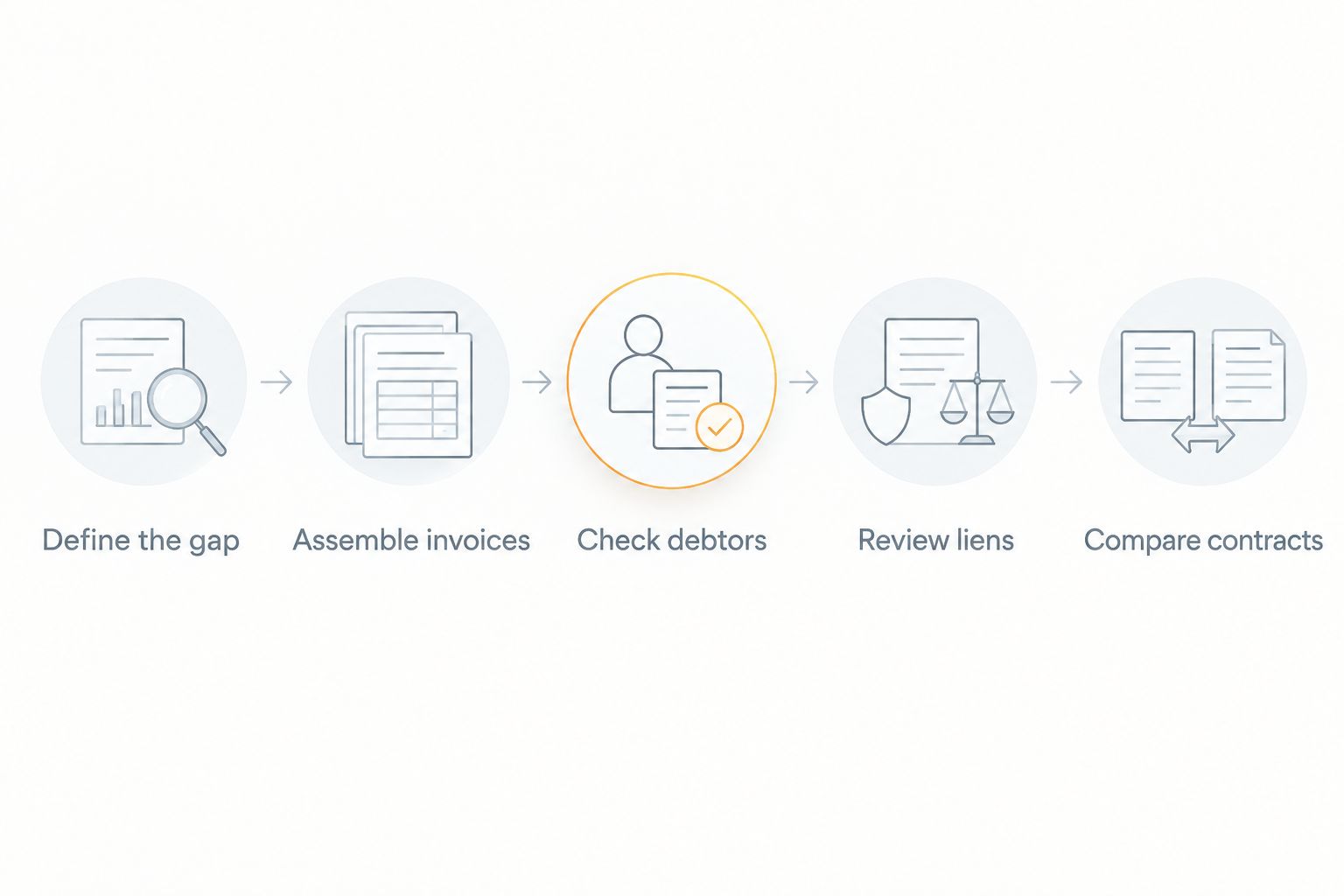
Follow this sequence:
- Define the gap: Identify the operating expense and the receivable expected to cover it.
- Assemble invoices: Gather invoices, rate confirmations and delivery evidence.
- Check debtors: List customer balances, aging and disputed amounts.
- Review liens: Identify existing financing and receivables assignments.
- Compare contracts: Match each proposal to the same invoices and risk questions.
This sequence separates a document problem from a funding problem. It also prevents you from choosing a factor before confirming that the invoices causing the gap are eligible.
How are these recommendations ranked?
The ranking prioritizes choosing the correct funding structure, then matching retained risk, credit protection, invoice selection and borrowing flexibility to your business. It does not rank companies by unverified approval rates, funding speed or customer outcomes.
Your final company ranking should follow the written proposals. Put customer eligibility first, then compare cash received, contractual exposure, operational fit and exit requirements.
FAQ
What's the best invoice factoring company for a trucking carrier?
The best company is the one whose written agreement fits your eligible customers, cash needs and risk capacity. Compare RTS Financial, OTR Solutions, Triumph, eCapital and Apex Capital using the same invoices and contract questions rather than assuming a universal winner.
Is nonrecourse factoring better than recourse factoring?
Nonrecourse factoring is better for transferring the specific debtor credit risks its agreement covers. Recourse factoring leaves defined nonpayment exposure with the carrier; neither label replaces a review of exclusions and chargebacks.
Does invoice factoring create a loan for my trucking company?
Invoice factoring generally involves selling eligible receivables rather than taking a conventional loan. The agreement still creates obligations, including possible recourse, warranties and security interests.
Can a factor reject invoices from a freight broker?
Yes, a factor can decline invoices that fail its customer or invoice eligibility requirements. Confirm approval for the brokers and shippers that generate your receivables before committing.
How much does trucking invoice factoring cost?
The total cost depends on the agreement and the events that trigger its deductions. Request a complete settlement calculation, including reserve treatment, additional charges and exit obligations.
Can I factor invoices while using another business funding product?
Existing funding can restrict your ability to factor receivables through liens, assignments or contract covenants. Review both agreements and resolve conflicting claims before adding another product.
Is Jon Lynch Financial Group a direct trucking factoring company?
Jon Lynch Financial Group is a broker, not a direct lender or contracting factor. Business-purpose funding is subject to the relevant third-party lender's or funder's underwriting and agreement.
Which option should you choose?
Choose recourse factoring when you can retain the specified nonpayment risk, nonrecourse factoring when the covered credit event matches your concern, and selective factoring when the contract permits the flexibility you need. Compare a line of credit when your cash requirement extends beyond completed invoices.
One last thing: the exit agreement deserves as much attention as the advance. Ask how customer payments, outstanding invoices and lien releases will be handled when you leave—not after you decide to switch.
Related guides
- Invoice factoring companies for freight brokers
- Working capital loans: costs and qualification
- Business line of credit lenders
- Merchant cash advance for trucking companies
What is your next step?
For your 2026 comparison, assemble your receivables aging and identify the expense you need to cover. Jon Lynch Financial Group serves U.S. business owners seeking business-purpose funding; approval, amounts, rates, decisions and funding times are not guaranteed.
If your business generates at least $35,000 per month, Compare Business Funding Options. If your business generates below $35,000 per month, Explore Self-Serve Funding through the tech-forward application path, where applicants securely connect bank statements through Plaid for an automated decision.



