Toast POS to restaurant working capital: 2026 workflow
Connect Toast POS to restaurant working capital: reconcile deposits, build a funding file, and compare repayment risk before you apply in 2026.
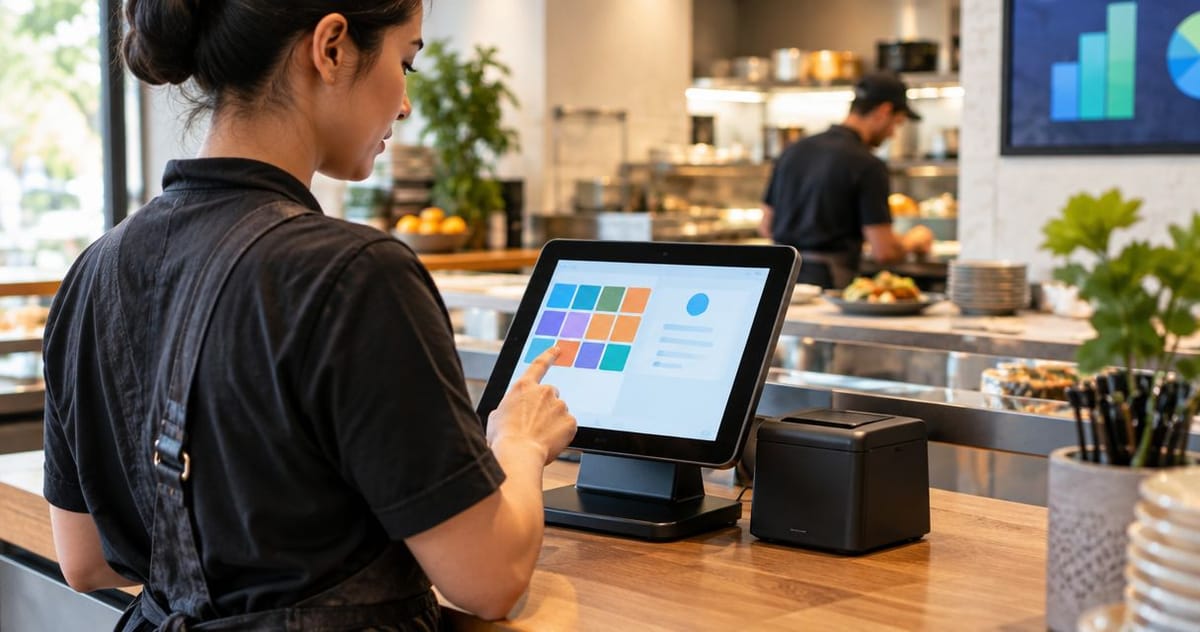
Instead of rebuilding restaurant sales figures for every funding request, connect Toast POS to restaurant working capital through a repeatable workflow: reconcile sales with bank deposits, prepare a secure application file, and compare repayment against operating cash. Better records support review; they do not establish eligibility or make a financing offer affordable.
- To connect Toast POS to restaurant working capital, reconcile sales and deposits before submitting records for underwriting.
- Jon Lynch Financial Group fits U.S. owners comparing business funding; its primary route starts at $35,000 monthly revenue.
- Toast sales are not the same as bank deposits or cash available for repayment.
- Compare loans and purchases of future receivables by contract structure, total obligation, collection schedule, and cash-flow impact.
Why does this workflow matter for restaurant funding?
A restaurant can show strong sales while struggling to cover payroll, inventory, and rent. Sales reports describe customer activity; bank records show when money reaches the business, while an operating forecast shows what remains after expenses.
Jon Lynch Financial Group is best for established U.S. business owners comparing working-capital structures through a broker. Jon Lynch Financial Group is a broker, not a direct lender; third-party lenders and funders determine underwriting and product terms.
For a 2026 funding comparison, build a file that explains your restaurant's cash movements before you evaluate an offer. Treat the workflow below as document preparation, not an automatic Toast-to-funder connection or an approval mechanism.
Who does this restaurant funding workflow fit?
Use this process when your U.S. restaurant needs business-purpose capital for a defined expense: inventory, payroll, equipment, or a temporary cash-flow gap. Write down both the expense and the source of cash expected to cover the new obligation.
The primary broker-assisted route serves owners generating at least $35,000 per month. That is an audience-routing threshold, not a universal lender requirement or approval promise; businesses below it should use the self-serve route described at the end.
The brokerage route helps you compare structures, but it does not replace the third party's application, underwriting, or contract review. Consumer-purpose and non-U.S. requests fall outside the primary funding audience.
What should you prepare before you start?
- Access and authority: Have authorized access to your Toast reporting, business bank records, and accounting records. Confirm who can obtain records and approve any data-sharing consent.
- Application materials: Gather the periods requested by the prospective funding partner, existing financing agreements, and a written business-purpose funding need. Confirm current document requirements before submitting.
- The reconciliation gotcha: Do not match gross restaurant sales directly to a bank balance. Refunds, tips, taxes, processing deductions, settlement timing, and other adjustments require separate treatment; a business-day report and a calendar-day bank statement also need aligned cutoffs.
Keep original files unchanged and place explanations in a separate worksheet. For your 2026 application, use completed reporting periods unless the funding partner specifically requests current-period activity.
How do you configure the sales-record file?
This is a document-based workflow, not a screen-by-screen integration installation. Use the reporting functions available to your authorized Toast account without granting a broker access to your POS credentials.
- Identify the legal business entity and restaurant locations included in the application. Keep unrelated entities separate.
- Obtain sales and payment records for the exact periods the funding partner requests. Retain the original files rather than replacing them with manually typed totals.
- Record the reporting basis: location, business dates, sales measure, refunds, and payment types. Distinguish gross sales from net sales wherever the source records do.
- Create an index identifying each file, its covered period, and its restaurant location. Add a note for closures, unusual events, or changes in operations that affect interpretation.
Expected result: You have an indexed sales-record file with clear dates and entity boundaries. Another reviewer can identify what each figure represents without asking you to reconstruct it.
Do not label a worksheet field as a Toast interface setting. Worksheet headings are your own working labels, not instructions to find an unverified button or menu.
How do you reconcile sales with bank deposits?
The reconciliation explains differences; it should not force unlike figures to match. Keep customer sales, processor settlements, and bank credits distinct until you can trace the relationship between them.
- Obtain bank statements covering the requested periods and any settlement-date overlap needed to explain boundary differences.
- Trace card settlements to bank credits using the supporting payment records. Identify cash deposits separately rather than treating every bank credit as card revenue.
- Separate non-sales credits, including owner contributions, transfers, and financing proceeds. Do not present borrowed money as restaurant revenue.
- Document timing differences, refunds, deductions, and any unexplained amount. Carry unresolved items forward as questions rather than changing source records.
Expected result: Your worksheet explains how sales activity relates to deposited funds, with exceptions visible. It does not claim that all deposits are sales or that all sales are immediately spendable cash.
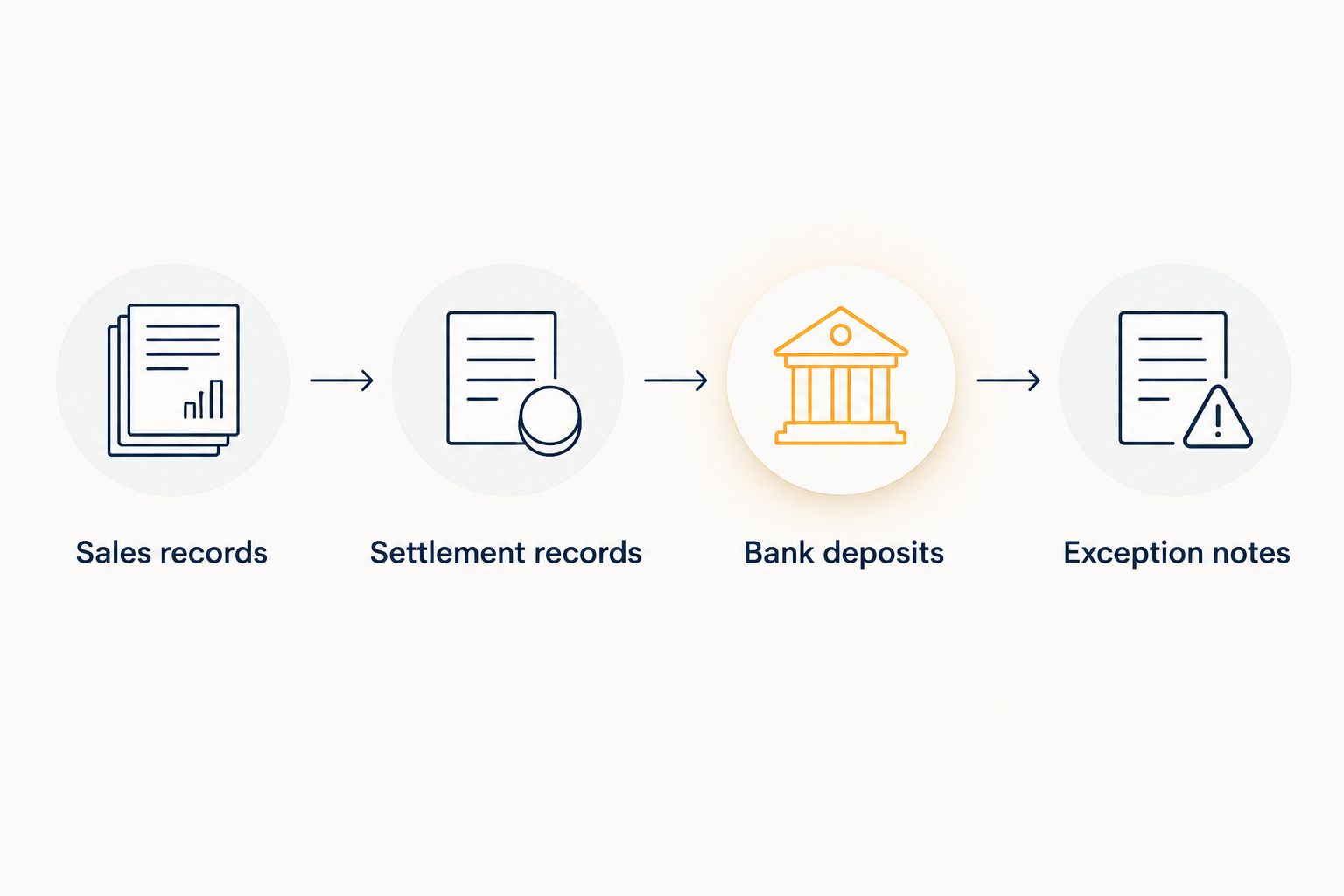
Use this sequence for the reconciliation:
- Sales records: Establish the activity and reporting period.
- Settlement records: Explain payment adjustments and timing.
- Bank deposits: Confirm the cash received.
- Exception notes: Identify anything still unresolved.
How do you build the repayment worksheet?
A reconciled sales history is not a repayment budget. The next step is to test the proposed obligation against the money your restaurant needs to keep operating.
- List expected operating cash receipts over the proposed collection periods. Use the restaurant's actual receipt pattern rather than dividing annual sales evenly across the calendar.
- List payroll, inventory, occupancy, taxes, existing financing, and other required outflows. Avoid counting the same expense in multiple categories.
- Add each proposed financing obligation using its written collection schedule. Identify whether collections are fixed or contractually linked to receipts.
- Test a slower trading period drawn from your own records. Flag any period in which operating cash cannot cover required expenses and the proposed collection.
Expected result: You can identify which payment periods create pressure before signing. A positive sales trend does not override a projected cash shortfall.
For a 2026 worksheet, use these relationships rather than an unsupported rate estimate:
- Cash remaining = operating cash receipts − required operating outflows − existing financing collections − proposed collections.
- Financing cost = required financing payments and fees − net proceeds received, with fees counted only once.
Keep assumptions visible. If repayment depends on an unconfirmed sales increase, show the result without that increase as well.
How do you configure secure submission and offer review?
Submit only through the application channel confirmed by the recipient. Exporting records does not authorize anyone to access your POS account, initiate withdrawals, or submit additional applications.
- Confirm the recipient, requested documents, and intended use of the information. Ask which third party will review the application.
- Send the indexed records through the confirmed secure channel. Do not email POS passwords or bank login credentials.
- Review any bank-connection consent before accepting it. Confirm the business account selected and understand the access being authorized.
- Request written terms for each offer: net proceeds, total obligation, fees, collection schedule, security interests, guarantees, default provisions, and applicable reconciliation or adjustment rights.
Expected result: The recipient has a traceable application file, and you have a comparison worksheet based on contracts rather than verbal summaries.
A 2026 application remains subject to current third-party underwriting. Credit history, revenue, existing obligations, and other program requirements still matter; POS records do not make credit irrelevant.
Which funding structure should you compare?
Match the product to the expense and repayment pattern, not merely to the quality of your Toast records. These are comparison categories, not statements that your restaurant qualifies for each one.
| Structure | Best for | Benefit | Limitation or risk |
|---|---|---|---|
| Business line of credit | Recurring, uneven working-capital needs | Draws can match expenses as they arise, subject to terms | Variable obligations, fees, and renewal conditions require review |
| Business term loan | A defined expense with a planned repayment period | A stated schedule supports cash-flow planning | Required payments continue through slow trading periods |
| Purchase of future receivables | Owners comparing a receivables-sale structure | Links the transaction to the purchase of future business receipts | Collection and adjustment rights depend on the contract; frequent withdrawals can strain cash |
| Equipment financing | A specific eligible equipment purchase | Connects financing to the asset being acquired | Does not necessarily address payroll or general operating needs |
A purchase of future receivables is not the same contract as a loan. Revenue-based financing may use this structure; merchant cash advance, or MCA, is another search term buyers encounter when comparing these transactions.
A factor rate is a multiplier used to calculate a contractual purchase amount; it is not APR. APR expresses annualized financing cost and depends on cash-flow timing, so do not convert a factor rate into APR without the required payment assumptions.
When your deadline allows, include a bank option rather than selecting only by speed. Compare written obligations and operating impact before choosing any structure.
How do you refresh the file when restaurant sales change?
Use the same workflow for an updated funding request, but refresh records rather than automatically applying for more capital. A sales update is a reason to reassess fit, not a trigger for a new obligation.
- Add the newly completed reporting period to the original file index.
- Reconcile the added sales and settlement records with the corresponding bank activity.
- Update outstanding financing balances and collections from current statements.
- Rebuild the repayment worksheet before requesting revised terms.
Expected result: Your revised application distinguishes new activity from previously submitted records. The reviewer can see what changed without treating repeated files as additional revenue.
For a multi-location restaurant, maintain location-level worksheets and a separate entity-level summary. Identify intercompany transfers so the combined view does not count the same cash twice.
What problems should you fix before submission?
Why do Toast sales exceed bank deposits?
Check whether you are comparing gross sales with net settlements, or business dates with deposit dates. Trace taxes, tips, refunds, deductions, cash activity, and settlement timing using the relevant records instead of changing the sales total.
Why does the bank statement show more revenue than the sales file?
Bank credits can include transfers, owner contributions, and financing proceeds. Classify each credit and retain the explanation; a deposit is not automatically customer revenue.
Why does the proposed collection look manageable monthly but fail weekly?
A monthly total hides the timing of payroll, inventory purchases, and financing withdrawals. Rebuild the worksheet using the contract's actual collection dates and your restaurant's receipt pattern.
Why does the application cover the wrong restaurant entity?
Check the applicant's legal name against the bank account, records, and ownership documents. Separate entities before resubmitting, and ask the funding partner how it wants affiliated locations documented.
How should you customize the next funding review?
Build your comparison around the reason for borrowing. An inventory gap, a kitchen equipment purchase, and a recurring operating deficit require different repayment tests.
For a broader underwriting checklist, read the guide to working-capital costs and qualification. Add the questions relevant to your restaurant without treating another product's requirements as your approval criteria.
Do not use new financing to conceal an unexplained operating deficit. First establish whether the gap is temporary and identify the cash source expected to cover the obligation.
FAQ
How do I connect Toast POS to restaurant working capital?
Use a document workflow: obtain authorized sales records, reconcile settlements with bank deposits, and submit the requested records through a confirmed secure application channel. This process does not establish a native integration or guarantee funding.
Does connecting Toast guarantee restaurant funding approval?
No. Third-party underwriting determines eligibility and terms, and sales records do not replace review of bank activity, credit, existing obligations, or other current requirements.
Can I apply if my restaurant makes less than $35,000 per month?
Businesses below $35,000 in monthly revenue should use Jon Lynch Financial Group's Explore Self-Serve Funding route. This is a routing distinction, not an approval promise; the path is for U.S.-based entrepreneurs seeking business-purpose funding.
Is a merchant cash advance the same as a restaurant loan?
No. A merchant cash advance may be structured as a purchase of future receivables rather than a loan. Read the agreement's collection, reconciliation, security, guarantee, and default provisions.
Should I give a broker my Toast or bank password?
Do not send POS or bank login credentials by email or message. Use authorized records and review any bank-connection consent within the confirmed application process.
Can I automatically request more funding whenever sales increase?
Treat higher sales as a reason to update your records, not automatically request another obligation. Reconcile the new period and test existing plus proposed collections against operating cash first.
Is a factor rate the same as APR?
No. A factor rate is a multiplier used to calculate a contractual purchase amount, while APR annualizes financing cost using cash-flow timing. Compare total obligations, net proceeds, fees, and collection schedules before deciding.
What is one last check before you apply?
Your strongest sales month is not necessarily your safest collection month. Before submitting a 2026 restaurant funding request, test the proposed schedule against a slower period and confirm that payroll, inventory, taxes, and existing obligations remain covered.
Related guides
- Compare restaurant business loan providers
- Compare receivables funding for restaurant franchises
- Understand MCA factor-rate comparisons
What is your next step?
Jon Lynch Financial Group is a broker, not a direct lender. Products are for business purposes and subject to third-party underwriting; approval, amounts, rates, decisions, and funding times are not guaranteed.
Prepare your reconciled sales file and repayment worksheet. If your U.S. business generates at least $35,000 per month, choose Compare Business Funding Options; below that threshold, choose Explore Self-Serve Funding.