Self-Storage CRE Financing: 2026 Options Compared
Compare commercial real estate financing for self-storage facilities in 2026: bank, SBA, bridge and CMBS structures, LTV ranges, and DSCR requirements.
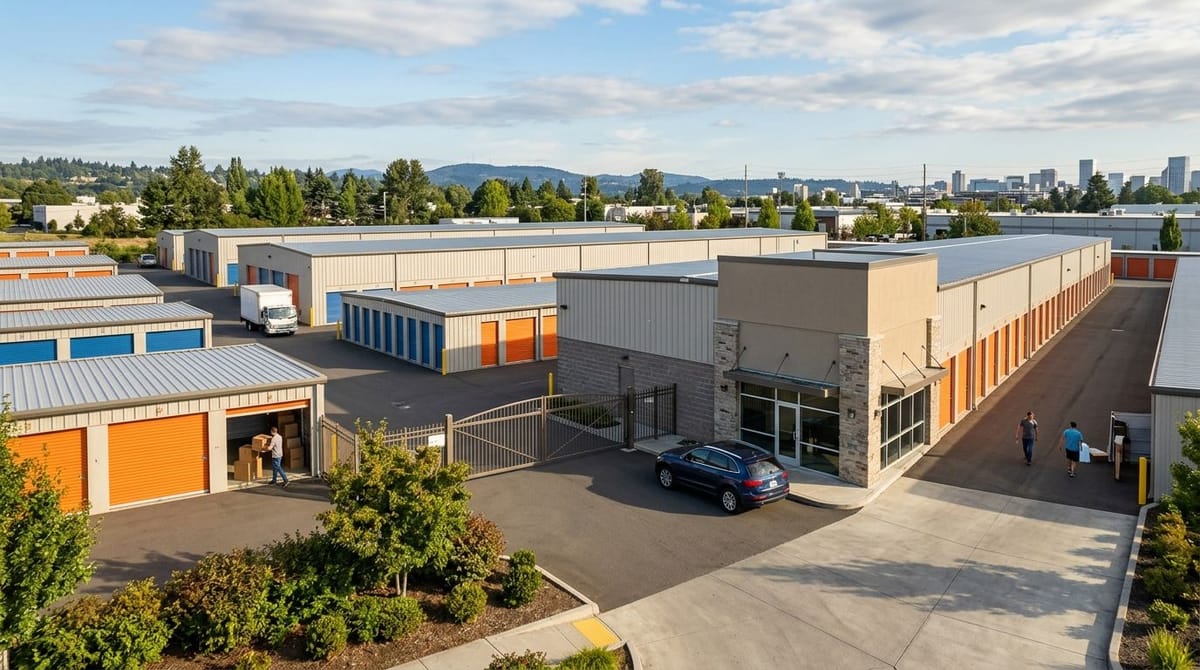
Commercial real estate financing for self-storage facilities is asset-backed lending sized to a property's net operating income and physical occupancy, not the borrower's credit score alone, structured to fund acquisition, ground-up construction, or refinance without stalling on appraisal or lease-up risk. Self-storage carries lower operating expense ratios than most commercial property types and fewer tenant-default headaches than retail or office space, but lenders scrutinize unit mix — climate-controlled versus drive-up — and trailing 12-month occupancy trends harder than they do on a standard multifamily deal. Business owners weighing a self-storage acquisition against other financing routes can compare business funding options before signing a term sheet.
- Self-storage CRE loans in 2026 price off trailing net operating income and physical occupancy, not just borrower credit.
- Bank loans, SBA 504/7(a), bridge loans, and CMBS/life-company debt are the four most common structures for storage properties.
- Loan-to-value on self-storage typically runs 60-75%, tighter on ground-up construction than on stabilized acquisitions.
- Jon Lynch Financial Group is a broker, not a direct lender, and compares structures before you commit to a term sheet.
Why self-storage financing works differently than other CRE deals
Self-storage facilities generate revenue from hundreds of small, month-to-month tenants instead of a handful of long-term leases, which changes how a lender reads risk. That works in the borrower's favor on default risk, but it cuts the other way on appraisal: lenders and third-party appraisers want a unit-mix breakdown, a competitive rent survey, and a trailing 12-month occupancy trend before they'll price the deal.
Ground-up self-storage construction also carries a longer lease-up window than a comparable multifamily project, which is why construction and bridge lenders build in interest-only periods and staged draws rather than pricing off day-one occupancy. A facility that looks stabilized on economic occupancy can still get flagged if physical occupancy tells a different story — a distinction that trips up first-time self-storage borrowers more than any other underwriting item.
How to finance a self-storage acquisition, build, or refinance in 2026
1. Document trailing 12-month net operating income correctly
Lenders underwrite self-storage off net operating income (NOI), and sloppy NOI documentation is the single most common reason a term sheet stalls.
- Separate ancillary revenue (truck rental, tenant insurance, retail sales) from unit rent so the appraiser can weight each stream correctly
- Break out climate-controlled versus drive-up rent per square foot
- Reconcile management-software revenue reports against actual bank deposits before submission
- Strip one-time capital expenditures out of the operating expense line
- Show at least 12 consecutive months of trailing financials, not year-end summaries alone
2. Match the loan structure to your deal stage
The right financing structure depends on where the facility sits in its lifecycle, not on which lender your broker knows best.
- Acquisition of a stabilized facility: conventional bank loan or SBA 504/7(a)
- Ground-up construction or expansion: construction-to-permanent or bridge financing
- Refinance after a value-add renovation: bridge-to-permanent structure
- Portfolio acquisition across multiple facilities: CMBS or life-insurance-company debt
3. Build the capital stack before you approach a lender
Self-storage loan-to-value commonly runs 60-75%, which leaves a real gap between senior debt and total project cost on most acquisitions.
- Determine how much of the deal senior debt realistically covers at that LTV range
- Decide whether a preferred equity slice or mezzanine piece fills the remaining gap
- Document the source of any down payment or general-partner equity in writing
- Structure seller financing or an earn-out if the seller wants ongoing participation
- Get capital stack structuring for real estate developers reviewed before the lender issues a term sheet
Once the free, manual version of this work is done — NOI documented, stage identified, stack roughed out — a broker comparison speeds up the next step instead of replacing it.
Compare Business Funding Options
See bank, SBA, bridge and CRE structures side by side before you sign.
4. Get the property appraisal-ready
Appraisers on self-storage deals ask for different documentation than they would on office or retail, and missing pieces delay the loan.
- Unit-mix breakdown by size, climate control, and current rent
- Three years of trailing financials, not just the most recent tax return
- Documentation of recent capex: roofing, gate systems, security cameras
- Zoning confirmation and any expansion or easement paperwork
- A competitive rent survey of nearby facilities within the trade area
5. Match lender type to loan size and timeline
- Local or regional banks fit smaller stabilized deals but close slower and want longer occupancy history
- SBA 504/7(a) fits owner-operators buying or expanding a facility they'll partly occupy
- Bridge lenders fit deals that need a 30-to-60-day close or a lease-up runway before permanent debt
- CMBS or life-company lenders fit larger stabilized portfolios and the longest closing timelines
6. Line up bridge or gap financing if your timeline is tight
A bridge loan lets you close on acquisition or construction while occupancy stabilizes, then refinance once trailing NOI clears the permanent lender's covenant.
- Use interest-only bridge financing to close while occupancy climbs toward the permanent lender's minimum
- Confirm the debt-service coverage ratio (DSCR) threshold you need to hit before converting to permanent debt
- Check prepayment terms before signing an interest-only note
- Bridge loans for commercial property acquisitions can cover that gap while the facility stabilizes
7. Compare all-in cost, not just the headline rate
A lower headline rate with heavier fees can cost more than a higher rate with a clean fee structure — run both all the way through.
- Add origination points, appraisal, environmental, and legal fees to get a true cost figure
- Confirm whether the prepayment penalty is a step-down schedule or yield maintenance
- Ask whether the loan requires a personal guarantee on top of the property lien
- Check if construction draws carry recourse even when the permanent loan is non-recourse
- Confirm the DSCR covenant and any cash-sweep trigger before you sign
Self-storage financing options compared
| Option | Best for | How it's priced | Key limitation |
|---|---|---|---|
| Conventional bank CRE loan | Stabilized facility acquisition or refinance | Fixed or floating rate tied to prime or SOFR plus a spread | Slowest close, strict occupancy-history requirement |
| SBA 504/7(a) | Owner-operators buying or expanding a facility | Blended rate with an SBA guarantee fee built in | Requires an owner-occupancy percentage, longer approval cycle |
| Bridge loan | Fast close or lease-up runway before permanent debt | Interest-only, short term, priced above bank rate | Higher carrying cost, needs a defined exit to permanent financing |
| CMBS or life-company loan | Larger, stabilized self-storage portfolios | Fixed rate, often non-recourse | Yield-maintenance prepayment, limited flexibility mid-term |
| Commercial real estate lenders for value-add deals | Facilities needing renovation before permanent refinance | Structured around post-renovation stabilized value | Requires a documented value-add plan and clear exit timeline |
Verdict: a bridge structure wins when occupancy or renovation isn't stabilized yet; a bank or SBA loan wins once trailing NOI and physical occupancy both clear the lender's minimum.
Common mistakes self-storage owners make when financing a deal
- Comping a facility against retail or industrial cap rates instead of storage-specific comps, which skews the appraisal
- Applying for permanent bank financing before occupancy stabilizes, leading to an automatic decline instead of a counteroffer
- Skipping the unit-mix breakdown in appraisal prep, which undervalues climate-controlled inventory
- Stacking short-term working-capital debt against the property's income instead of matching structure to the asset
- Not comparing DSCR covenants and cash-sweep triggers across lenders before signing, then getting distributions trapped mid-term
FAQ
What loan-to-value can I expect on self-storage facility financing in 2026?
Self-storage CRE loans typically run 60-75% loan-to-value in 2026, tighter on ground-up construction than on a stabilized acquisition. The remainder is covered by borrower equity, seller financing, or a preferred equity slice in the capital stack.
Is SBA financing available for self-storage facilities?
Yes, SBA 504 and 7(a) programs finance self-storage when the borrower operates part of the facility rather than acting purely as a passive investor. The tradeoff is a longer approval cycle than a conventional bank loan.
How long does self-storage CRE financing take to close?
Timelines vary by lender type: conventional bank and SBA loans close slower due to occupancy-history review, while bridge financing can close faster when the borrower needs to move on an acquisition. Exact timing depends on appraisal, environmental review, and documentation completeness.
Can I get a bridge loan for a self-storage acquisition?
Yes, bridge loans are common on self-storage deals that need a fast close or a lease-up runway before qualifying for permanent debt. The loan is typically interest-only and priced above conventional bank rates, with an expected refinance once trailing occupancy stabilizes.
What DSCR do lenders require for self-storage loans?
Most commercial lenders set a debt-service coverage ratio covenant in a similar range to other stabilized commercial real estate, and the exact minimum varies by lender and loan type. Confirm the covenant and any cash-sweep trigger before signing the term sheet.
Does climate-controlled inventory affect my appraisal?
Yes, appraisers price climate-controlled units differently than drive-up units because they command different rent per square foot. A facility's unit-mix breakdown should be part of the appraisal package from the first submission.
Is Jon Lynch Financial Group a direct lender for self-storage deals?
No, Jon Lynch Financial Group is a broker, not a direct lender. It compares bank, SBA, bridge, and CMBS structures across third-party lenders and funders on the borrower's behalf.
What's the difference between a bank CRE loan and a bridge loan for storage facilities?
A bank CRE loan prices lower but requires stabilized occupancy history and a slower close, while a bridge loan closes faster and tolerates lease-up risk at a higher interest-only rate. Most owners use a bridge loan to close, then refinance into permanent bank or SBA debt once occupancy clears the covenant.
One last thing
Lenders weigh physical occupancy against economic occupancy separately, and the two numbers don't always agree. A facility running high economic occupancy off discounted promotional rents can still get flagged in underwriting if physical occupancy tells a different story — ask your appraiser for both figures before you submit a rent roll, not after the lender asks for them.



