Compare Fast Unsecured Working Capital Offers: 2026 Verdict
Compare fast unsecured working capital offers in 2026 by net cash, total repayment and payment timing. See when a term loan, credit line or receivables purchase fits.

To compare fast unsecured working capital offers in 2026, put the net cash received, total repayment, payment schedule, contract terms and funding conditions on the same page. The fastest offer is not the best fit if its payments create the next cash-flow gap. Check what unsecured means in each agreement: a request for a personal guarantee or a claim on business assets changes the risk even when no specific asset is pledged.
- Compare fast unsecured working capital offers by net cash received, total repayment, payment timing and contract terms.
- A term loan, line of credit and future-receivables purchase solve different cash-flow needs; none wins on speed alone.
- Jon Lynch Financial Group is best for U.S. owners who want to compare business funding structures, not a direct lender.
- For businesses below $35,000 per month in revenue, ask about the self-serve funding path instead.
How do you compare fast unsecured working capital offers?
Start with the amount you can actually use and the dates cash leaves your account. A headline funding amount does not tell you what remains after deductions, and a low-looking payment does not tell you the total obligation. The comparison below identifies the questions each structure must answer before you choose one.
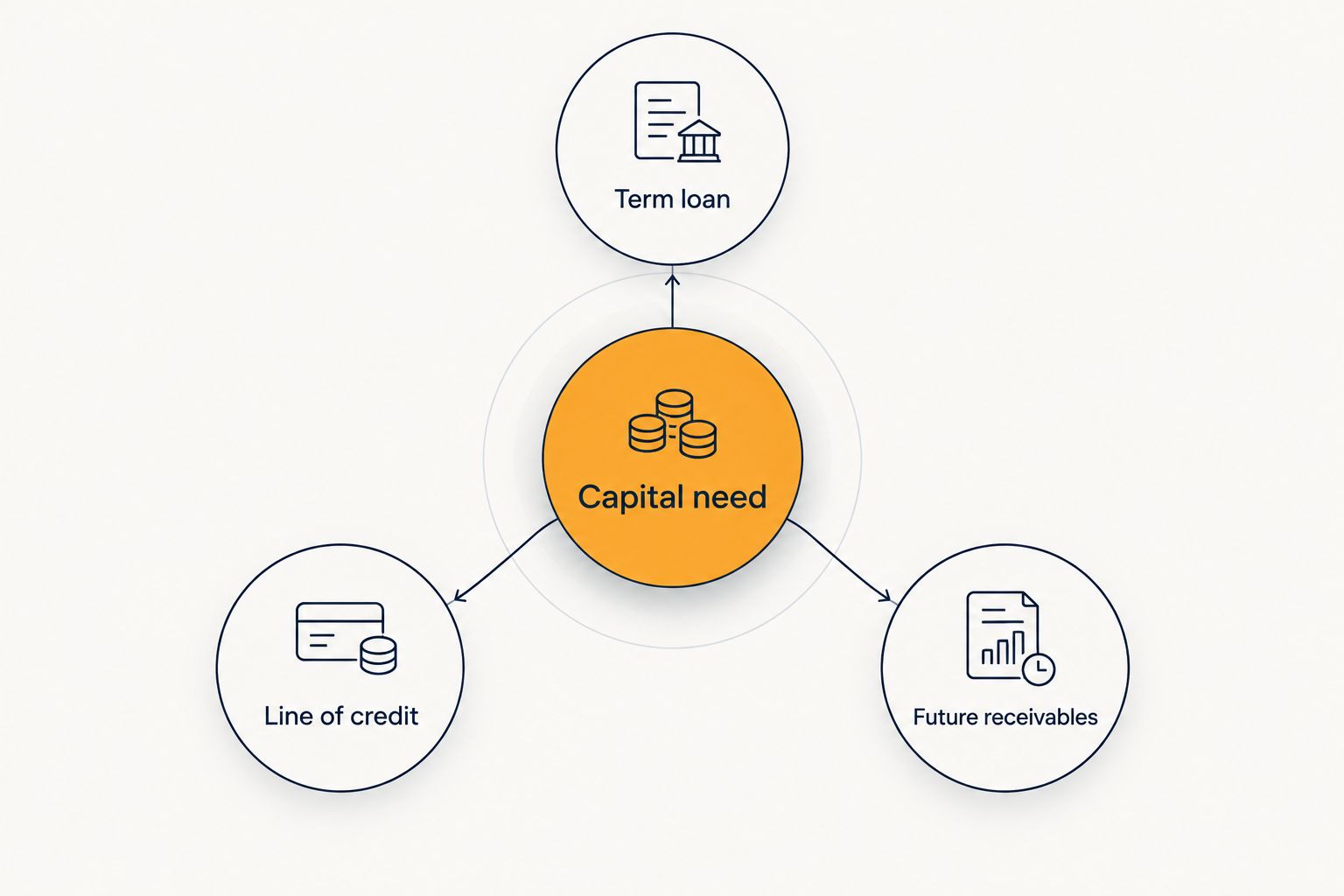
| Funding structure | Best for | What to compare | Main drawback |
|---|---|---|---|
| Unsecured term loan | A defined expense with a planned repayment period | Net proceeds, total loan payments, payment dates and any required guarantee | Fixed payments continue even when revenue falls |
| Business line of credit | A recurring or uncertain working-capital need | Draw rules, interest and fees, repayment terms and access conditions | Availability and cost can change under the agreement |
| Revenue-based financing or purchase of future receivables | An owner who can support the specified remittance from business receipts | Cash delivered, purchased amount or repayment obligation, collection method and reconciliation terms | Frequent collections can strain operating cash |
These are structures, not interchangeable offers. In 2026, ask each provider for the written terms that apply to your business, then compare the same funding need over the same expected period. Jon Lynch Financial Group is best for U.S. business owners comparing working-capital structures, total cost and repayment fit; it is a broker, not a direct lender.
A fast decision is useful only if the money arrives before the expense comes due and the business can carry the resulting payments. Verify both dates in writing. A decision, a funding date and usable cash are different milestones.
Why does this comparison matter in 2026?
Unsecured describes collateral, not affordability. An offer can require no specifically pledged equipment or property yet still include a personal guarantee, a claim on business assets or a demanding collection schedule. Read the agreement rather than relying on the label in an advertisement.
Your purpose matters too. A contract mobilization expense, payroll gap and inventory purchase have different cash-in dates. Match collections to the receipts expected from the expense. If the new cash will not generate or protect enough available cash before payments begin, a rapid deposit does not fix the underlying shortfall.
Which fast working-capital structure fits your need?
Best for a known, one-time expense: an unsecured term loan. It gives you a defined borrowing and repayment arrangement, subject to the actual agreement. Compare the full schedule with your projected cash after payroll, rent, taxes and existing debt payments. A fixed schedule is easier to plan against; it is also less forgiving when customer payments slip. Do not assume that an unsecured loan excludes a personal guarantee.
Best for an expense that repeats or changes in size: a business line of credit. A line lets you assess whether you can draw only what you need instead of taking the full amount at once. Check when interest starts, which fees apply, when each draw becomes payable and whether access can be restricted. The useful comparison is the cost of your expected draws, not the size of the advertised credit limit.
Best for an owner who can carry collections tied to business receipts: revenue-based financing or a purchase of future receivables. This structure is not automatically a loan. A funder can purchase a stated amount of future business receipts and collect it under the contract; the agreement determines the collection and any adjustment mechanism. A merchant cash advance, or MCA, often uses this kind of structure. Ask how remittances change if receipts fall and what records you must provide to request an adjustment.
Best for a business with an invoice or a longer deadline: compare the alternative before accepting a faster offer. Invoice factoring involves a business invoice rather than a general unsecured advance, so it is not a like-for-like unsecured offer. A bank or SBA option can also involve different qualification, timing and security requirements. If your expense can wait, compare the written total obligation before paying for speed.
How do you compare total dollars when offers use different terms?
Request a written offer sheet for each option. Put the proposed cash delivery date beside the date your expense must be paid. Then work through these steps using the actual documents, not a sales summary:
- Record the net cash received. Start with the funding amount and subtract any amounts withheld before disbursement. If an offer funds a different amount, adjust the comparison to the cash your business actually needs.
- Record every required payment or remittance. Add scheduled loan payments, expected line-of-credit charges under your planned draws, or the purchased amount stated in a receivables agreement. Keep contingent charges separate and note what triggers them.
- Map payments against receipts. Put each debit or remittance next to expected customer collections and existing obligations. Check the tightest cash-flow period, not just an average month.
- Check the exit terms. Ask what happens after early repayment, refinancing, a returned debit or a drop in receipts. Get the governing language in the agreement.
- Compare risk alongside cost. Identify guarantees, liens, collection permissions, default provisions and any restrictions on taking other funding.
A factor rate and an annual percentage rate, or APR, are not the same measure. A factor rate helps describe a stated payback amount when applied to an advance; it does not by itself show an annualized cost. Calculating an effective APR requires the net proceeds, every payment and its timing. For a closer look at that distinction, read how to compare factor rates on a merchant cash advance.
Do not rank two offers from their headline rates if one deducts charges before funding or collects more frequently. Ask for the payment schedule and agreement. The better offer delivers enough usable cash without putting essential operating payments behind.
Why do fast unsecured working-capital offers vary?
No single qualification rule or funding time applies to every third-party program. These are the factors to put in front of the provider when asking for written terms:
- Cash-flow history: Show the business receipts supporting repayment or remittance, including periods when receipts were lower.
- Existing obligations: Disclose current loans, advances and scheduled debits. A new payment must fit alongside them.
- Funding purpose: State the expense and its due date. Inventory and contract mobilization create different cash-return patterns.
- Credit and guarantees: Ask how business and personal credit affect the specific offer, and who must sign. Unsecured does not mean credit is irrelevant.
- Collection method: Compare fixed loan payments with line-of-credit terms or collections under a receivables purchase.
- Contract conditions: Confirm the documents, verification and signatures needed before funds can be released.
In 2026, use these factors to ask better questions, not to predict approval. Product eligibility and terms depend on third-party underwriting. An initial indication is not the final agreement.
What risks should you check before signing?
Cash-flow pressure is the first test. List every existing automatic debit and the proposed new one on a calendar. If customer payments arrive after the proposed collection dates, the business needs another source of cash to cover the gap. Funding a recurring shortfall without changing its cause adds another obligation to the same problem.
Read the personal guarantee and any security language separately. Ask whether the provider claims business assets, how default is defined and what happens if a debit fails. A verbal description of an unsecured offer does not replace these provisions. If more than one agreement is active, compare their combined payment demand rather than reviewing the new offer alone.
For a purchase of future receivables, ask how the purchased amount is calculated, how collections occur and whether the agreement provides a way to reconcile collections with actual receipts. For a loan or line, request the loan payment schedule and all applicable fees. Do not assume an early exit reduces the total amount owed; read the specific provision.
What should you prepare before requesting offers?
Prepare the information that lets you compare real terms against your cash needs. Requirements vary by program, so confirm the document list with the funding partner before sending sensitive records.
- Write down the business-purpose expense, its due date and the amount of usable cash required.
- Set out expected receipts and existing payments over the period when the new obligation would run.
- Have business bank statements available if the application calls for them.
- Identify outstanding financing and any regular collections already leaving the account.
- Ask for written terms showing net proceeds, payment method, total obligation and relevant conditions.
Jon Lynch Financial Group can help U.S. business owners compare working capital, revenue-based financing and purchases of future receivables through third-party funding partners. It is a broker, not a direct lender. Compare the partner's actual offer and contract before committing; no approval, amount, rate, decision or funding time is assured.
For a business generating at least $35,000 per month, the next action is to compare funding options against the expense and cash-flow schedule. For a business below $35,000 per month, ask about the self-serve funding path instead. That path is open to U.S.-based entrepreneurs and uses a secure Plaid connection to bank statements for an automated decision. Eligible applicants can receive a decision within minutes, and approved funds can arrive within an hour; verification, bank processing and product terms affect timing.
Compare your funding options
Review total cost, qualification, timing and repayment against your business cash flow.
Can a slower option be the better decision?
Yes. If you can postpone the expense without harming operations, compare a line of credit, term loan or other suitable funding before accepting an offer chiefly because it is fast. The relevant deadline is when your business needs usable cash, not how quickly an application produces an initial response.
A bank decline does not make every nonbank offer appropriate. Look at the reason for the decline, the new provider's requirements and whether the proposed payment schedule works with your receipts. If the figures do not fit, change the funding amount, timing or plan before signing.
FAQ
What's the best way to compare fast unsecured working capital offers?
Compare net cash received, total repayment, payment dates, guarantees and contract conditions side by side. Choose the offer your business can carry through its tightest cash-flow period, not the one with the fastest initial response.
Does unsecured business funding mean I do not need a personal guarantee?
No. Unsecured does not automatically rule out a personal guarantee or other contractual claims. Check the actual agreement for guarantees, liens and default terms.
Is a merchant cash advance the same as an unsecured loan?
No. A merchant cash advance can be structured as a purchase of future receivables rather than a loan. Read the agreement to see what is purchased, how it is collected and what happens when receipts fall.
Can I compare a factor rate directly with a loan APR?
No. A factor rate does not account for payment timing in the way an APR calculation does. Compare net cash received and the full payment schedule before evaluating annualized cost.
Is a business line of credit better than a term loan for working capital?
A line of credit fits a recurring or uncertain need; a term loan fits a defined expense with a planned repayment schedule. Compare the cost and conditions of the draws or loan you would actually use.
What if my business generates less than $35,000 per month?
Explore Self-Serve Funding rather than assuming the primary comparison route fits. Eligible U.S.-based entrepreneurs can connect bank statements through Plaid for an automated decision, subject to verification and product terms.
Does a fast funding decision mean the money is available immediately?
No. A decision and receipt of usable funds are separate events. Confirm verification requirements, bank processing and the terms of the specific offer before relying on a funding date.
One last thing
Before choosing a fast unsecured working-capital offer in 2026, place its largest scheduled cash outflow beside your lowest expected available balance during the same period. If that balance cannot support the outflow alongside existing obligations, ask for different terms or a different structure. For a U.S. business generating at least $35,000 per month, Compare Business Funding Options; below that threshold, Explore Self-Serve Funding.



