Equipment Financing for Solar Installers: 2026 Verdict
Compare equipment financing, SBA loans and revenue-based financing for solar installation businesses in 2026, with factor rate math and qualification steps.
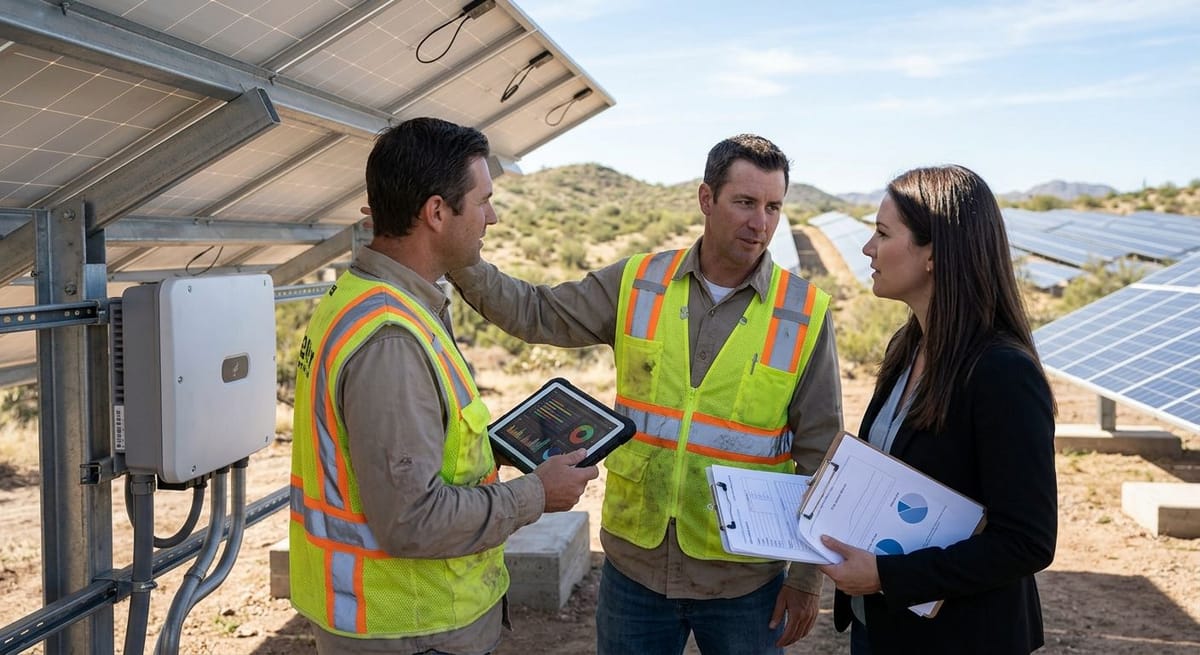
Solar installation companies finance equipment through five main paths: equipment financing or leasing, SBA 7(a) loans, business term loans, revenue-based financing structured as a purchase of future receivables, and a business line of credit. The path that actually gets funded fast depends on time in business, monthly revenue and whether you can put equipment up as collateral — not just your credit score.
- Equipment financing and leasing tie payments to the useful life of racking, inverters and install trucks, usually 2 to 7 years.
- SBA 7(a) loans cap at $5 million but require full underwriting, so they fit planned buys, not emergency equipment purchases.
- Revenue-based financing (MCA) funds faster, with factor rates commonly quoted between 1.1 and 1.5, at a higher total dollar cost than a term loan.
- Getting equipment financing for a solar installation business usually means comparing at least three structures before you sign anything in 2026.
- Jon Lynch Financial Group compares these options as a broker, not a direct lender, before you commit to one lender's terms.
Why this matters
Solar crews carry equipment costs that don't wait for a slow decision: racking, inverters, string testers and a bucket truck all need to be paid for before a job starts, while the utility interconnection and permitting process can push out the payday by weeks or months. That gap is exactly where owners get stuck choosing the wrong financing structure and paying for it in cash flow later.
A lender that structures a solar equipment purchase the same way it structures a delivery van loan is going to miss the timing problem. Solar installers who've already compared working capital loans for solar installation companies know the equipment decision and the working capital decision are related but not the same product.
How Do Solar Installation Companies Finance Equipment?
Most solar installers land on one of five structures, and the right one changes with the size of the purchase and how fast the crew needs it in hand.
| Financing Type | Best For | Repayment Structure | Collateral Needed |
|---|---|---|---|
| Equipment financing/leasing | Racking, inverters, install trucks | Fixed payments over 2 to 7 years | The equipment itself |
| SBA 7(a) loan | Large equipment package plus working capital | Fixed monthly payments, longer amortization | Often required, SBA-guaranteed |
| Business term loan | One-time purchase with strong financials | Fixed term, fixed payments | Varies by lender |
| Revenue-based financing (MCA/future receivables purchase) | Fast purchase without full underwriting | Percentage of daily or weekly revenue | None — based on receivables |
| Business line of credit | Recurring parts and equipment costs | Draw and repay, interest on used balance | Sometimes secured |
A head-to-head comparison of equipment financing structures for solar contractors, including how factor rates and amortization schedules actually compare in dollars, is broken down in compare equipment financing options for solar installers.
The hidden cost most owners miss isn't the rate — it's the down payment or personal guarantee a lender attaches to secure the equipment. Skip that step in the comparison and the cheapest quoted rate can still be the worst total-dollar outcome.
Equipment Financing and Leasing: Terms Tied to Equipment Life
Equipment financing and leasing structure payments around how long the racking, inverters or trucks are expected to last, typically 2 to 7 years. Lenders in this category usually want 10% to 20% down, and the equipment itself secures the loan, which is why rates on this structure tend to run lower than an unsecured advance.
Leasing keeps the equipment off your balance sheet and often ends with a buyout or return option; financing means you own it outright once the term is paid. A crew replacing string inverters every few years leans toward leasing; a crew buying a truck that'll run for a decade leans toward ownership. Owners scaling equipment across multiple trades, not just solar, use the same math reviewed in equipment leasing options for manufacturing businesses to decide between the two.
Verdict: buy equipment financing when you can put 10-20% down and want the lowest total-dollar cost on gear you'll keep for years.
SBA 7(a) Loans: Financing Up to $5 Million
The SBA 7(a) program can finance up to $5 million, and it's the deepest pool of capital available to a solar installer buying a large equipment package alongside working capital. The tradeoff is underwriting: full financial documentation, a business plan for the use of funds, and a timeline measured in weeks, not days.
This structure fits an installer planning a known equipment buy months out, not one that needs a truck replaced by Friday. Verdict: SBA financing wins on cost of capital for planned, larger equipment purchases — skip it if the crew needs the equipment this week.
Business Term Loans and Equipment-Heavy Financing
A business term loan gives you a fixed amount, fixed payments and a set payoff date, structured around the business's financials rather than tied exclusively to the equipment as collateral. This is the middle ground between SBA's low cost and revenue-based financing's speed.
Businesses whose entire operation runs on physical equipment — trucks, racking inventory, testing gear — often qualify for the same structures reviewed in term loans for equipment-heavy businesses, which weighs approval odds against how much of the balance sheet is tied up in gear. Verdict: a term loan fits an installer with steady revenue history who wants predictable payments without pledging every piece of equipment.
Revenue-Based Financing (MCA): Factor Rates of 1.1 to 1.5
Revenue-based financing, sometimes structured as a purchase of future receivables or quoted as a merchant cash advance, is the fastest path to cash for an equipment purchase because underwriting leans on bank statements and revenue history instead of a full credit package. Factor rates on this structure are commonly quoted between 1.1 and 1.5, which converts to an effective APR well above a term loan or SBA product once you run the math on total dollars repaid.
Jon Lynch Financial Group is a broker, not a direct lender, and revenue-based financing may be structured as a purchase of future receivables rather than a loan — the repayment comes as a percentage of daily or weekly revenue, not a fixed monthly bill. Verdict: use it when the equipment purchase can't wait and the margin on the job covers the higher total cost — otherwise a term loan or lease costs less.
Business Line of Credit: Revolving Capital for Recurring Costs
A business line of credit doesn't fund one large equipment purchase well, but it covers recurring parts, small tools and the gap between jobs where cash gets tight. You draw what you need, pay interest only on the drawn balance, and the line refills as you repay it.
Verdict: pair a line of credit with a term loan or equipment lease rather than using it as the sole source for a major equipment buy.
Why Equipment Financing Terms Vary
- Time in business — newer installers face tighter terms and smaller advance amounts across every structure.
- Monthly revenue — higher, more consistent revenue supports lower factor rates and larger term loan offers.
- Equipment type and resale value — racking and inverters with strong resale value secure better rates than specialty tools.
- Credit profile — personal and business credit still affects SBA and term loan pricing, even though it isn't the only factor.
- Existing debt stack — installers already carrying an MCA position often see worse terms on the next equipment offer.
- Utility and permitting timelines — longer interconnection delays push owners toward faster, higher-cost financing out of necessity, not preference.
Compare Business Funding Options
See equipment financing, SBA and revenue-based options side by side before you apply.
Can a new solar installation business get equipment financing?
A new solar installation business can get equipment financing, but expect smaller advance amounts, higher down payment requirements, or a revenue-based structure instead of a bank term loan until there's a longer revenue history. Lenders weigh time in business heavily on this decision in 2026, more than they weigh the equipment's resale value alone.
Is an SBA loan better than equipment financing for solar equipment?
An SBA loan, capped at $5 million under the 7(a) program, generally costs less over the life of the loan than standalone equipment financing, but it takes longer to fund and requires more documentation. Equipment financing or leasing wins when speed matters more than the lowest possible rate.
How does a purchase of future receivables work for solar contractors?
A purchase of future receivables funds a lump sum against a percentage of future revenue, repaid daily or weekly rather than on a fixed monthly schedule, and it is not a loan in the traditional sense. Factor rates on this structure typically run 1.1 to 1.5, which needs to be converted to an effective APR before comparing it against a term loan or SBA offer.
FAQ
How do solar installation companies finance equipment?
Solar installation companies finance equipment through equipment financing or leasing, SBA 7(a) loans, business term loans, revenue-based financing (a purchase of future receivables), or a business line of credit. Most owners compare at least two structures before choosing, since the cheapest quoted rate isn't always the lowest total-dollar cost.
What credit score do you need for solar equipment financing?
Credit requirements vary by structure — SBA and term loans weigh personal and business credit more heavily than revenue-based financing, which leans on bank statements and monthly revenue instead. A lower credit score doesn't disqualify you from every option, but it narrows which ones offer competitive terms.
Is equipment leasing or equipment financing cheaper for a solar installer?
Equipment financing typically costs less over time because you own the asset at the end of the term, while leasing spreads a lower payment across the lease period without building equity in the equipment. The right choice depends on whether the gear will outlast the financing term or need replacing sooner.
How fast can a solar installation business get equipment funded?
Revenue-based financing funds the fastest because underwriting relies on bank statements rather than a full credit package, while SBA loans take the longest due to full documentation requirements. Equipment financing and business term loans generally fall in between, depending on the lender's underwriting process.
What's the difference between a merchant cash advance and equipment financing?
A merchant cash advance, or a purchase of future receivables, isn't a loan — it's an advance repaid as a percentage of revenue, priced with a factor rate rather than an APR. Equipment financing is a traditional loan or lease secured by the equipment, generally priced lower but funded slower.
Can equipment financing cover a solar company's install trucks?
Equipment financing commonly covers install trucks, racking, inverters and testing gear, with the equipment itself serving as collateral. Terms typically run 2 to 7 years depending on the expected useful life of the asset being financed.
Does an SBA loan cover equipment and working capital together?
An SBA 7(a) loan, capped at $5 million, can cover equipment purchases and working capital needs in a single facility, which is one reason installers planning a larger buildout use it over a standalone equipment loan. The tradeoff is a longer underwriting timeline compared to equipment-only financing.
Is Jon Lynch Financial Group a direct lender for equipment financing?
Jon Lynch Financial Group is a broker, not a direct lender, and compares equipment financing, SBA, term loan and revenue-based financing options through third-party funding partners. Approval, amounts, rates and funding times are never guaranteed on any of these structures.
One last thing
Owners comparing equipment financing for a solar installation business almost always focus on the rate first and the repayment schedule second — flip that order. A factor rate of 1.1 sounds cheaper than a term loan's stated APR until you run both to total dollars repaid over the same period, and the repayment schedule (daily draws versus a fixed monthly bill) is usually what breaks cash flow, not the rate itself.