StateBasedSystems alternatives for license compliance
Compare StateBasedSystems alternatives: NIPR for filings, Sircon for CE workflows and AgentSync for agency compliance. Separate licensing needs from funding.

State Based Systems (SBS) provides insurance license information and regulatory services for participating states, but state records alone do not organize an agency’s entire compliance workload. The best StateBasedSystems alternatives in 2026 are NIPR for supported licensing transactions, Sircon for licensing and continuing-education workflows, and AgentSync for agency-wide producer compliance management. If your real problem is paying for a licensing cleanup or expansion, separate that funding decision from the software decision: financing does not restore a license.
- Compare StateBasedSystems alternatives by task: NIPR for transactions, Sircon for licensing workflows, AgentSync for producer compliance management.
- Keep state insurance departments as the authority on license status and requirements.
- Jon Lynch Financial Group provides business-funding brokerage, not a replacement for SBS or licensing software.
- Resolve licensing deficiencies before assuming future commissions can support new financing.
Why does license compliance matter to your funding decision?
An insurance agency’s funding plan depends on revenue it can lawfully earn. Before borrowing to recruit producers, acquire a book or enter another state, identify the licenses, appointments and approvals that the plan requires.
Jon Lynch Financial Group is a commercial finance broker, not a direct lender or insurance licensing platform. Its role is helping U.S. business owners compare business-purpose funding through third-party partners—not confirming that a producer can transact insurance.
Treat licensing readiness and cash availability as separate approval gates. Having money available does not establish authority to sell, and an active license does not establish eligibility for financing.
Which StateBasedSystems alternatives fit each task at a glance?
For your 2026 shortlist, start with the task you cannot complete reliably today. An application portal, a continuing-education workflow and an agency compliance system address different problems.
| Option | Best for | Standout function | How it differs from SBS | Main limitation |
|---|---|---|---|---|
| State Based Systems | Looking up records and using services in participating states | State-facing insurance regulatory services | Baseline for this comparison | Not a substitute for an agency’s internal ownership and escalation process |
| NIPR | Supported insurance license applications and renewals | Electronic licensing transactions | Transaction-focused route across participating jurisdictions | State and transaction eligibility still control |
| Sircon | Licensing and continuing-education workflows where supported | Licensing services alongside CE-related functions | A different service environment for supported tasks | Coverage and functions must match your specific state and license |
| AgentSync | Managing producer compliance across an organization | Producer licensing and appointment management workflows | Agency-side coordination rather than only individual state tasks | Does not replace regulatory authority or remove internal accountability |
None of these options replaces the state insurance department’s authority. Verify the current route for the exact license, entity and transaction before entering information or submitting a filing.
Can Jon Lynch Financial Group replace SBS?
No. Jon Lynch Financial Group is a business-funding brokerage, not a license-compliance software alternative. It belongs in the decision only when your agency has a defined business-purpose cash need connected to compliant operations.
For example, identify whether you need capital for payroll during expansion, implementation work or an acquisition. Then distinguish those expenses from a regulatory problem that money alone cannot resolve.
Where the funding route fits
- Comparing working capital, term financing and other available structures through third-party partners.
- Assessing total repayment, payment frequency and the cash flow supporting the obligation.
- Separating the operating budget from the compliance remediation plan.
Where it falls short
- Funding does not submit a license renewal or correct an inaccurate regulatory record.
- A broker cannot promise third-party approval, terms or funding timing.
- New payments are unsuitable if the business lacks a credible repayment source.
Best for: U.S. business owners comparing capital for an identified operating need. Verdict: Skip as an SBS replacement; consider separately for business funding.
1. Is NIPR best for applications and renewals?
NIPR, the National Insurance Producer Registry, provides electronic insurance licensing services. Choose NIPR when your immediate task is a supported application or renewal rather than coordinating every compliance responsibility inside an agency.
Start with the transaction you need. Confirm the jurisdiction, license type, resident or nonresident status, and whether the filing concerns an individual or business entity.
Where NIPR shines
- Provides a transaction route for supported insurance licensing applications and renewals.
- Helps you focus on the specific filing rather than selecting a larger operational system first.
- Fits a workflow in which an assigned person already tracks requirements and deadlines.
Where NIPR falls short
- A submitted application is not the same as an approved license.
- Availability depends on the jurisdiction and transaction.
- Filing access does not assign responsibility for your agency’s reminders, exceptions or producer supervision.
| Dimension | NIPR | SBS |
|---|---|---|
| Primary comparison | Supported electronic licensing transactions | Regulatory information and services in participating states |
| Selection question | Can this exact filing be completed here? | Does this state provide the needed record or service here? |
| Agency responsibility | Track submission, requirements and disposition | Interpret records and act on outstanding requirements |
Best for: Owners or compliance staff completing a defined licensing transaction. Verdict: Buy only the supported service you need; keep your tracking process intact.
2. Is Sircon best for licensing and CE workflows?
Sircon provides insurance licensing services and continuing-education-related functions. Put Sircon on your 2026 shortlist when the operational issue involves both licensing tasks and tracking education requirements where those services are supported.
Continuing education, or CE, is required education associated with maintaining applicable licenses. Completing a course, having credit reported and satisfying a renewal requirement are separate events; verify each one rather than treating a completion certificate as the final answer.
Where Sircon shines
- Brings licensing services and CE-related functions into the same comparison.
- Gives an agency another supported route to evaluate for its jurisdictions.
- Fits teams that can name the licensing or education task they need to complete.
Where Sircon falls short
- A platform cannot waive a state’s education or licensing requirements.
- Do not assume every service is supported for every state or license.
- Buying access does not establish who will investigate missing credits or incomplete filings.
| Dimension | Sircon | SBS |
|---|---|---|
| Evaluation focus | Supported licensing and CE services | Participating-state regulatory services and records |
| Practical test | Can staff complete the required workflow? | Can staff access the required state information or service? |
| Remaining obligation | Verify credits, filing results and state requirements | Verify status and resolve outstanding requirements |
Best for: Agencies evaluating supported licensing and CE workflows together. Verdict: Buy only after checking your actual jurisdictions and required functions.
3. Is AgentSync best for agency-wide producer management?
AgentSync provides producer licensing and appointment management software. Evaluate AgentSync when your problem is coordinating producers and compliance work across an organization, not simply finding a license record.
The useful demonstration is your workflow—not a general product tour. Ask the vendor to show how your team would identify an exception, assign responsibility, document resolution and confirm the underlying regulatory record.
Where AgentSync shines
- Focuses on organizational producer-compliance management.
- Addresses licensing and appointments as connected operational responsibilities.
- Fits an evaluation centered on repeatable agency processes rather than isolated lookups.
Where AgentSync falls short
- Software does not replace state approvals or carrier requirements.
- Implementation still requires an internal owner and clear responsibilities.
- An agency needing only occasional lookups must justify a broader management system against that limited need.
| Dimension | AgentSync | SBS |
|---|---|---|
| Primary purpose | Organizational producer-compliance workflows | Participating-state regulatory services |
| Evaluation scope | Agency processes and producer management | Specific state records and tasks |
| Accountability | Agency staff must resolve exceptions | Agency staff must interpret and act on records |
Best for: Agencies needing coordinated producer-compliance operations. Verdict: Hold until a demonstration proves the fit for your actual workflow.
Why do agencies look beyond State Based Systems?
The useful reasons to compare StateBasedSystems alternatives in 2026 are task-specific. Do not replace a working process because another product has a longer feature list.
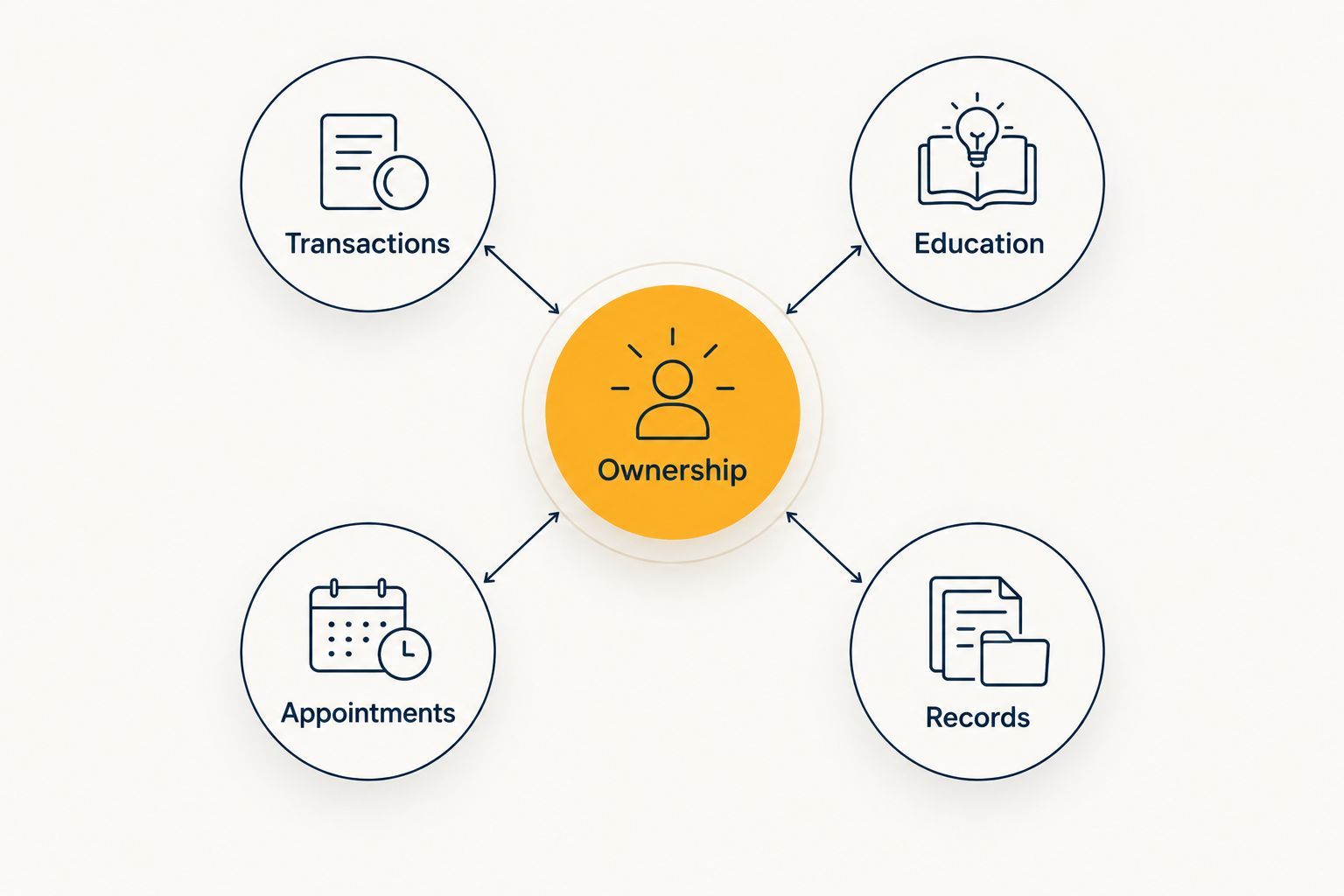
Identify which problem you have:
- Transactions: You need a supported route to submit an application or renewal.
- Education: You need to reconcile completed education with the applicable requirement.
- Ownership: Nobody is clearly responsible for a deadline or exception.
- Appointments: Licensing and carrier appointment work are being treated as interchangeable.
- Records: Staff cannot consistently reconcile internal information with authoritative records.
The first problems call for the appropriate service. Ownership requires a management decision even when software supports it.
How should you compare cost without confusing software with funding?
Build separate budgets for regulatory obligations, internal labor, technology and financing. Combining them hides which expense is necessary and which purchase needs further justification.
For a 2026 software evaluation, request a written scope covering implementation, included functions, support, renewal terms and data export. Compare the same producer population and jurisdictions across proposals.
For financing, compare these contract terms instead:
- Net proceeds the business actually receives.
- Total contractual repayment or purchased receivables amount.
- Payment or remittance frequency.
- Origination charges and other contractual deductions.
- Personal guarantees, security interests and default provisions.
- Prepayment treatment and any reconciliation process.
A factor rate is a multiplier used to determine a contractual amount; it is not an annual percentage rate. Revenue-based financing may be structured as a purchase of future receivables rather than a loan, so review the actual agreement before comparing offers.
Do not finance a recurring software commitment without testing whether ordinary operating cash flow can support both obligations.
What risks should stop you before borrowing?
Pause a funding application if the repayment plan assumes revenue from activity your agency is not yet authorized to conduct. First identify the missing approval, its owner and the evidence needed to resolve it.
Other warning signs include unexplained differences between internal records and state records, no assigned renewal owner, or an expansion budget that omits ongoing compliance work. These are reasons to repair the operating plan, not reasons to seek a faster funding promise.
Review licensing problems and business funding for insurance agencies before treating a compliance-related revenue interruption as an ordinary cash-flow gap.
Credit remains relevant to financing review. Its role, alongside revenue, obligations and other qualifications, depends on the third-party program; no software subscription establishes funding eligibility.
What should you prepare before comparing options?
Create a compliance file and a funding file. Keep them separate so the person handling licensing does not mistake a financing conversation for regulatory clearance.
Compliance file
- Producer and business-entity identifiers.
- Jurisdictions, license types and current status evidence.
- Renewal requirements and education records.
- Appointment requirements relevant to the planned activity.
- Open exceptions, assigned owners and resolution evidence.
Funding file
- Business-purpose use of proceeds.
- Current revenue and bank statements.
- Existing financing obligations and payment schedules.
- Operating budget that includes ongoing compliance expenses.
- Cash-flow forecast showing how the new obligation would be supported.
Ask each provider what additional information the specific transaction requires. Avoid assuming a generic checklist covers every filing or financing program.
FAQ
What's the best StateBasedSystems alternative in 2026?
NIPR fits supported licensing transactions, Sircon fits supported licensing and CE workflows, and AgentSync fits organizational producer-compliance management. Choose by task and verify the exact jurisdiction and license requirements.
Can I stop using SBS after buying compliance software?
Buying compliance software does not eliminate the need to verify authoritative regulatory records. Keep access to the state-designated services required for your licenses and transactions.
Is NIPR the same as a state insurance department?
No. NIPR provides insurance licensing services, while state insurance departments retain regulatory authority over their jurisdictions. A submitted transaction does not establish approval.
Does completing CE automatically renew my insurance license?
No. Completing education and renewing a license are separate obligations. Verify credit reporting, the applicable requirements and the renewal transaction.
Can business funding fix a lapsed producer license?
Business funding does not restore a lapsed license. Resolve the applicable regulatory requirements separately and do not assume financing permits continued licensed activity.
Is Jon Lynch Financial Group a licensing platform or direct lender?
Jon Lynch Financial Group is a commercial finance broker, not a direct lender or licensing platform. Business-purpose products are subject to third-party underwriting and product terms.
Which funding route fits my agency's monthly revenue?
Businesses generating at least $35,000 per month should use Compare Business Funding Options. Businesses below $35,000 per month should use Explore Self-Serve Funding; neither route promises approval or funding.
When is staying with SBS the right call?
Stay with SBS when its supported services meet your actual needs and your internal process reliably assigns, checks and resolves compliance work. Adding another platform without a defined operational gap creates another system to manage.
The practical 2026 test is simple: name the task SBS does not cover for your agency, then demonstrate that the alternative handles it. If you cannot name the gap, postpone the purchase.
Related guides
- Finance an insurance agency book of business
- Avoid E&O exposure from a lapsed producer license
- Compare working capital costs and qualification
What is your next practical step?
Write down the unresolved licensing task before requesting either software proposals or capital. Then separate the compliance solution from the business expense you need to fund.
For U.S. businesses generating at least $35,000 per month, use Compare Business Funding Options. Below $35,000 per month, use Explore Self-Serve Funding; approval, amounts, rates and timing are not guaranteed.
Choose your business funding route
Separate your compliance requirements from the operating expense you need to fund.