Working Capital Loans for Landscaping Companies 2026
Working capital loans for landscaping companies in 2026: compare lines of credit, term loans and MCAs, run the factor rate math, and see which fits your season.
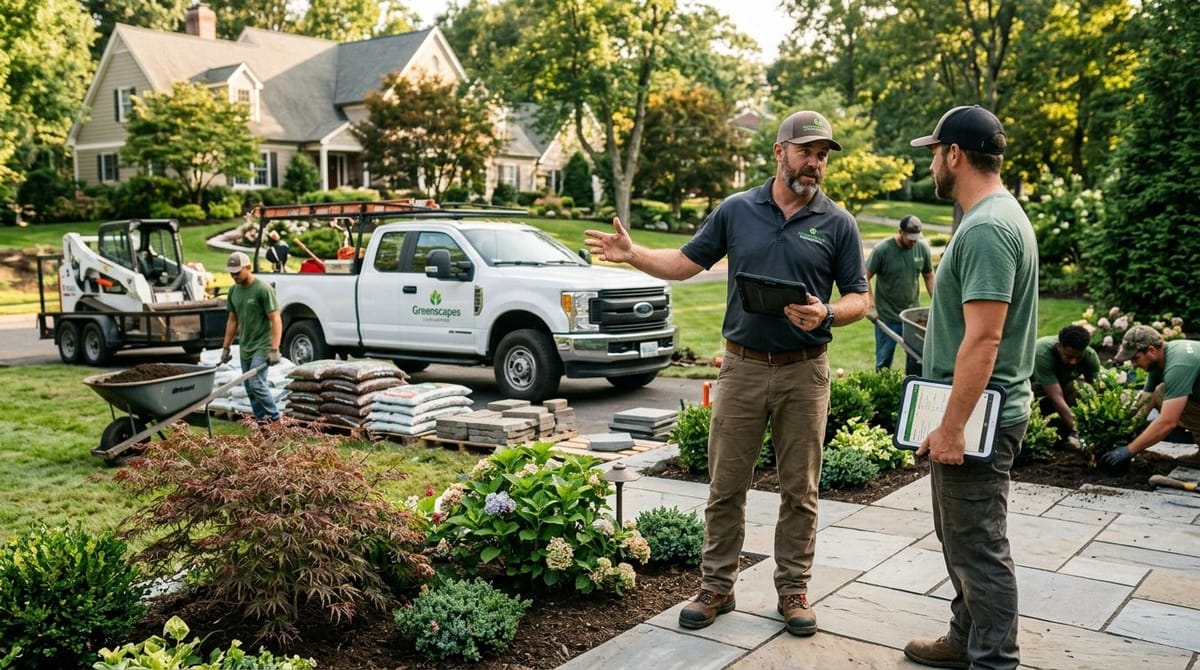
Working capital loans for landscaping companies are short-term financing tools — business lines of credit, term loans, or purchases of future receivables structured as merchant cash advances — built to cover payroll, fuel, mulch and equipment repairs between contract draws. Landscaping crews front labor and material costs weeks before a commercial or municipal invoice clears, and one blown mower deck in April can strip the cash a crew needs to run next week's routes. The right structure depends on how predictable your revenue is month to month, not on which lender pitches the fastest approval.
- Working capital loans for landscaping companies span bank lines of credit, term loans and MCAs structured as future receivables purchases.
- Seasonal revenue swings from spring ramp-up to winter slowdown make a revolving line a better fit than a fixed term loan for most crews.
- A $50,000 MCA at a 1.35 factor rate repays $67,500 total — always convert factor rate to effective APR before signing.
- Jon Lynch Financial Group is a broker, not a direct lender, comparing offers across lines of credit, term loans and revenue-based financing.
- Equipment financing and working capital solve different problems — mixing them up is the most common landscaping funding mistake in 2026.
Why working capital financing matters for landscaping companies
Landscaping revenue is lumpy in a specific way: spring and summer carry the volume, winter carries the slowdown unless snow removal fills the gap, and commercial or municipal contracts routinely run net-30, net-60 or net-90. Payroll and fuel don't wait on those terms. A crew that just won a new HOA or commercial maintenance contract often has to buy plant material, mulch and irrigation parts before the first invoice is even due.
Bank declines are common in this segment because landscaping companies carry thin balance sheets relative to revenue and rely on seasonal equipment that depreciates fast. That's exactly where working capital loans for construction contractors face the same underwriting friction in 2026 — mobilization costs due before draws clear, and banks slow to move on either segment.
Update your cash flow map before you shop lenders
Most landscaping owners chase financing after a cash crunch hits instead of mapping the gap in advance. Do this first, free, before any lender conversation:
- Chart monthly revenue against fixed costs (payroll, insurance, fuel, equipment payments) for the last 24 months
- Flag the months where commercial or municipal net-60 terms create the widest gap between labor cost and invoice payment
- Separate one-time capital needs (a new mower, a truck) from recurring operational gaps (payroll, materials)
- Calculate the dollar size of the worst month, not the average month — that number sets your credit line target
- Check whether snow removal, holiday lighting or irrigation winterization can smooth the Q4-Q1 dip before financing it away
Match the financing structure to your contract terms
A fixed term loan makes sense for a one-time purchase. A revolving line of credit makes sense when the same seasonal gap repeats every year. Confusing the two is where most landscaping owners overpay.
- If the gap repeats every winter, prioritize a business line of credit you can draw and repay on a cycle
- If the need is a single truck, mower fleet or irrigation rig, price a term loan or equipment financing structured for equipment-heavy operations against that specific asset
- If a bank has already declined the application, compare a purchase of future receivables against the line-of-credit alternative before assuming it's the only path
- Never finance payroll with a fixed-term loan sized for a five-year asset — the payment won't flex when a slow month hits
Price out equipment financing separately from working capital
A mower deck, a skid steer attachment, or a new truck is a collateralized purchase, not an operating gap. Bundling it into a working capital request usually means paying for the asset at working-capital pricing, which is more expensive than asset-backed terms.
- Get a standalone quote for the equipment against its own useful life, commonly matched five to seven years for trucks and mowers
- Confirm whether the lender requires a down payment or full collateral assignment on the equipment itself
- Crews adding snow removal to flatten winter revenue face the same decision: financing snow removal attachments follows the same collateral logic as financing a new mower deck, pairing the asset's productive life against the loan term rather than a 12-month working capital note — see financing snow removal attachments for the equipment side of that math
- Keep equipment debt off the working capital facility so the line of credit stays available for payroll and materials, not truck payments
Run the factor rate math before signing an MCA
A merchant cash advance is a purchase of future receivables, not a loan — the funder buys a fixed dollar amount of your future revenue at a discount, repaid through daily or weekly ACH debits against a factor rate. This example is illustrative, not a quote: a $50,000 advance at a 1.35 factor rate repays $67,500 total, regardless of how fast or slow the crew collects on its contracts.
- Convert the factor rate to an effective APR by dividing the total cost by the term length in months, then annualizing it
- Compare that APR against a bank line of credit's rate before deciding speed is worth the premium
- Ask whether the remittance is a fixed daily debit or a percentage of deposits — a fixed debit doesn't shrink in a slow week
- Read how to compare factor rates on a merchant cash advance before signing any 2026 offer without running the arithmetic yourself
Build a credit profile that qualifies for bank rates
Landscaping companies with thin business credit files get pushed toward MCAs by default, even when a line of credit would cost less over 12 months. Building the file takes months, not days, so start before the next slow season.
- Separate business and personal spending fully, with a dedicated business checking account and card
- Establish two to three vendor tradelines that report to business credit bureaus
- Keep utilization on any existing business credit line low heading into a lender application
- Review current standing before applying, so surprises don't surface mid-underwriting
Prepare the documents underwriters actually ask for
Most landscaping financing delays trace back to missing paperwork, not weak numbers.
- Twelve months of business bank statements, not just the most recent quarter
- Prior-year tax returns and a current-year profit and loss statement
- A list of active contracts with payment terms noted (net-30, net-60, net-90)
- Equipment titles or leases if any asset will secure the facility
- A voided business check for ACH setup
Compare the funding structures side by side
| Option | Best for | Key limitation |
|---|---|---|
| Business line of credit | Landscaping companies with a repeating seasonal cash gap | Requires stronger credit and time in business than an MCA |
| Term loan | A one-time crew expansion or vehicle purchase | Fixed payment doesn't flex if a season underperforms |
| MCA / purchase of future receivables | Companies declined by banks needing fast contract mobilization cash | Factor rate pricing often means a higher total cost than a loan |
| SBA loan | Established companies buying property or a heavy equipment fleet | Slow approval timeline, not built for urgent payroll gaps |
| Equipment financing | Financing a specific mower, truck or attachment | Doesn't cover payroll or material costs, asset-specific only |
The verdict for most landscaping companies in 2026: a revolving line of credit sized to your worst historical month, paired with standalone equipment financing for trucks and mowers, beats a single blended loan. An MCA still has a place when a bank has already declined the file and a contract mobilization deadline can't wait.
Compare landscaping funding options
See which structure fits your contract terms and season.
Common mistakes landscaping companies make
- Financing payroll with an MCA sized for equipment — the daily debit keeps pulling cash long after the payroll gap closed
- Skipping the seasonal cash flow map — applying reactively after a slow month instead of sizing a line before spring ramp-up
- Comparing a factor rate directly to a bank APR — a 1.35 factor rate is not 35% interest, and the effective APR over a short term runs materially higher
- Bundling equipment and working capital into one note — this raises the blended cost on the asset purchase and shortens the runway on operating cash
- Waiting for a bank decline before pricing a seasonal term loan option — comparing structures earlier usually surfaces a cheaper path than an MCA taken under deadline pressure
FAQ
What is the best working capital loan for a landscaping company in 2026?
There is no single best option. A revolving business line of credit fits companies with a repeating seasonal cash gap, while a purchase of future receivables fits companies that need cash fast after a bank decline. Match the structure to how predictable your revenue swing is, not to approval speed alone.
How much can a landscaping company qualify for in working capital financing?
Qualification depends on monthly revenue, time in business, and existing debt obligations, and varies by lender and program in 2026. Twelve months of bank statements and current contract terms are what underwriters use to size an offer.
Is a merchant cash advance the same as a loan?
No. An MCA is a purchase of future receivables, where the funder buys a fixed dollar amount of future revenue at a discount, repaid via daily or weekly debits rather than at an interest rate. Jon Lynch Financial Group is a broker, not a direct lender, and revenue-based financing may be structured as a purchase of future receivables.
How does a factor rate work on landscaping business funding?
A factor rate multiplies the funded amount to set total repayment. As an illustrative example, $50,000 at a 1.35 factor rate repays $67,500 total. Converting that to an effective APR is the only way to compare it fairly against a bank loan rate.
Can a landscaping business get working capital financing with bad credit?
Yes, though options narrow and pricing rises. Credit is not irrelevant, it sets which programs a file reaches, so comparing structures before signing an MCA can surface a lower-cost path for the same need.
Should landscaping companies finance equipment separately from working capital?
Yes. Mowers, trucks and attachments should be financed against the asset's useful life, commonly five to seven years, while payroll and material gaps belong on a revolving line sized to your worst seasonal month.
How fast can a landscaping company get funded in 2026?
Timelines vary by lender, credit profile and documentation completeness, and no funding time is guaranteed until underwriting confirms the file. Bank lines of credit and SBA loans consistently take longer than revenue-based structures.
Does taking on an MCA affect future bank financing?
An active MCA balance shows in bank statements and affects the debt service calculations an underwriter reviews for a future line of credit or term loan. Understand how existing advance debt is treated before stacking another one.
One last thing
The landscaping companies that avoid the worst financing mistakes in 2026 don't wait for a slow month to shop lenders. They size a revolving line against their worst historical month while revenue is still strong, then keep equipment debt on a separate track entirely. That one separation between operating cash and asset debt is the difference between a manageable winter and a cash crunch that forces an expensive advance under deadline pressure.
Next step: pull 12 months of bank statements and your active contract list, then compare a line of credit, a term loan and a future receivables offer on total dollars repaid, not headline rate.



