Business Funding Coconut Grove: Compare Costs | 2026
Business funding Coconut Grove owners can compare in 2026: choose by total cost, repayment and timing. See which structure fits your cash flow before applying.

Coconut Grove business funding is business-purpose financing for local owners, with the aim of covering a defined cash-flow gap or investment without taking on repayment the business cannot support. In 2026, the right option depends on total dollars paid, when cash is needed, qualification and the payment schedule—not the neighborhood named on an application. Jon Lynch Financial Group is best for established U.S. business owners comparing business-purpose funding through third-party partners, not owners seeking a direct lender.
- For business funding Coconut Grove owners can compare in 2026, start with the cash need and a repayment forecast.
- Jon Lynch Financial Group is best for established owners comparing third-party funding; it is a broker, not a direct lender.
- Compare a line of credit, term loan and receivables purchase by total repayment, timing and cash-flow impact.
- A business generating at least $35,000 per month can compare funding options; smaller businesses can explore the self-serve path.
Why does business funding matter for Coconut Grove owners?
A payroll gap, an inventory order and an equipment purchase create different repayment demands. The mistake is treating them as the same request for cash. A recurring gap calls for a different structure from a single purchase with a defined useful life.
For a Coconut Grove business owner, the decision is practical: identify the obligation, establish when it comes due and test whether incoming revenue covers both operations and the proposed payments. In 2026, a funding offer that arrives in time but drains the operating account before payroll is not a solution.
Start with the obligation, not the advertised funding amount. If you need capital after a bank decline, review why the bank declined the request before choosing an alternative. A timing issue, a documentation gap and an inability to carry more debt call for different next moves. A decline does not, by itself, make a faster offer affordable.
How do you compare Coconut Grove business funding options?
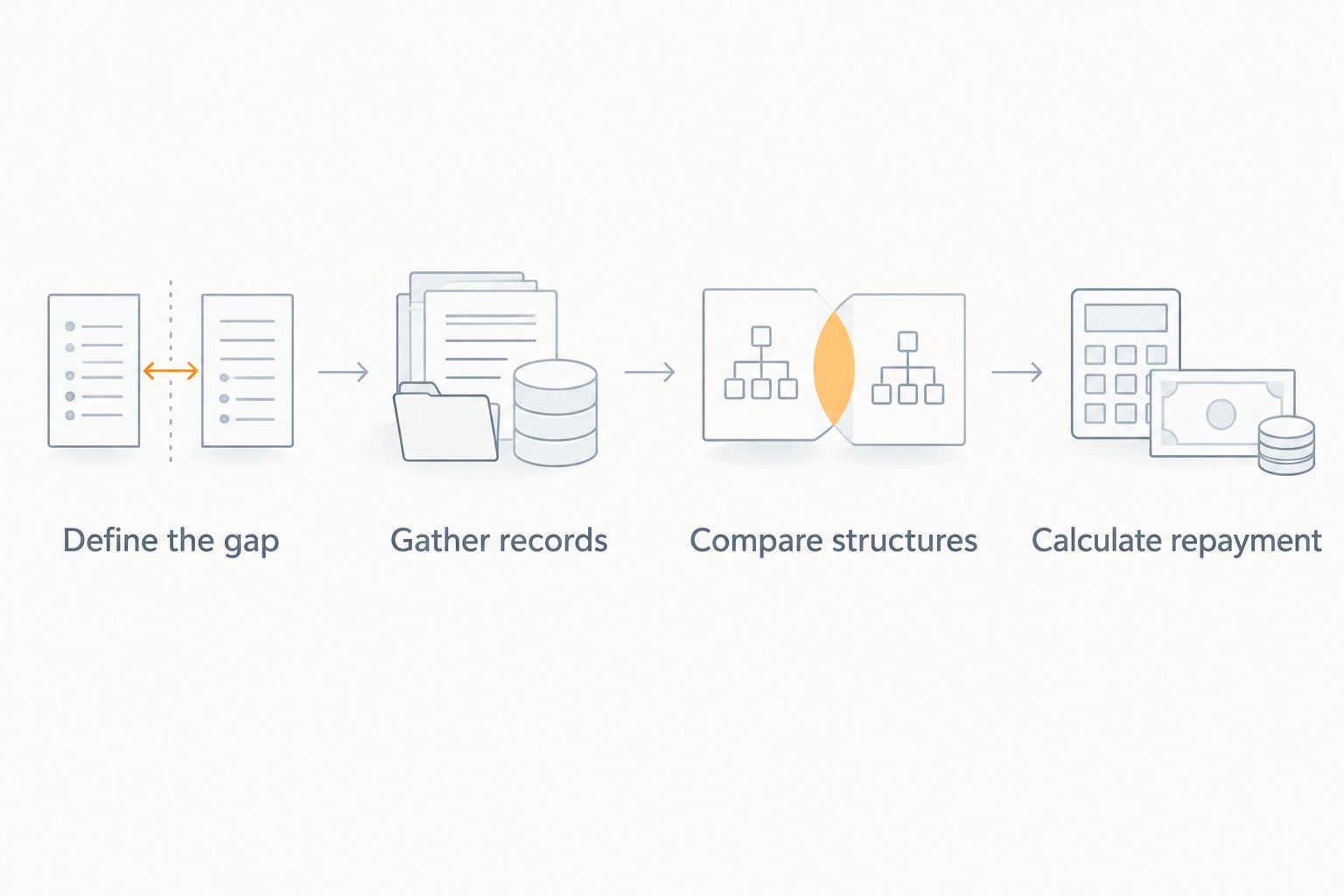
Use your own records to build a short comparison before speaking with a broker or funder. Each step below narrows the choices and gives you a question to put to any provider. For 2026 offers, ask for the proposed terms in writing; an illustrative calculation is not a quote.
Define the gap before requesting capital
Write down what the money will pay for and the date each payment is due. Separate a temporary mismatch between receivables and bills from an expense that will take longer to recover. If the need has no defined end, adding a fixed payment can deepen the gap.
For a contract mobilization expense, map expected customer receipts against the supplier, labor and operating payments required to complete the work. For inventory, ask whether the goods are already committed to customers or still need to sell. Those distinctions affect how much repayment pressure the business can absorb.
- List each business-purpose expense and its due date.
- Record the amount available from existing cash.
- Identify the customer receipts expected to cover repayment.
- Reduce the request to the amount the cash-flow plan supports.
Gather records that show cash flow
Start with bank statements, revenue records, existing financing agreements and a list of current payment obligations. You can review these yourself before sharing them. The goal is to know whether deposits are steady enough for a fixed payment or fluctuate enough that payment timing deserves closer scrutiny.
Do not assume a strong sales month represents the normal month. Mark transfers separately from customer revenue and note any existing daily or weekly debits. In 2026, a comparison built on gross deposits alone can miss the payments already leaving the account.
- Separate customer revenue from transfers and one-off deposits.
- Mark recurring payroll, rent, supplier and tax obligations.
- List outstanding balances and their payment schedules.
- Check whether recent statements match the revenue you report.
Compare structures before comparing offers
A business line of credit generally fits a recurring need when you want access to funds as expenses arise; review the draw rules, repayment terms and lender requirements. A term loan fits a defined expense when its scheduled payments match the benefit the purchase brings. Equipment financing ties the request to an equipment purchase, while invoice factoring depends on eligible invoices.
Revenue-based financing links the funding decision or repayment to business revenue, but the contract controls the actual mechanics. It may be structured as a purchase of future receivables rather than a loan. A merchant cash advance, or MCA, is commonly discussed in that category; read the agreement to see what is being purchased and how collections work. Do not treat different structures as interchangeable because they deliver the same amount of cash.
Jon Lynch Financial Group's business funding brokerage can help established owners compare available third-party options after they have defined the need. It cannot make an unsuitable payment schedule affordable.
- Match a recurring gap to a reusable facility only if its terms fit.
- Match a defined purchase to a repayment period the business can support.
- Check invoice eligibility before relying on factoring.
- Read receivables-purchase terms rather than assuming they work like a loan.
Calculate total repayment and payment pressure
For every written proposal, record the amount delivered to the business, every required payment and the total dollars the business must pay. Then put the payments on a calendar next to payroll, supplier bills and expected customer receipts. An offer with a manageable total cost can still fail if its payments fall before the cash arrives.
Consider an illustrative example, not an available offer: a business receives $40,000 under an agreement with a 1.25 factor rate. The stated purchased amount is $40,000 × 1.25 = $50,000, or $10,000 more than the amount received, before considering any other contract terms. If that $50,000 were collected in equal amounts over 10 weeks, the collection would be $5,000 per week. The example shows why both the total and the schedule matter; it does not establish an APR or describe a real product.
A factor rate multiplies the funded amount to express a stated repayment or purchased amount. APR annualizes the cost of credit using timing and cash flows; it is not the same figure. Ask for the cash-flow details needed to compare a loan with a receivables purchase rather than converting one number by guesswork.
- Calculate the difference between cash received and total required payments.
- Put each proposed payment beside operating expenses by date.
- Review fees and treatment of early payoff in the agreement.
- Ask how collections change if revenue falls.
Check qualification and contract responsibility
A provider's qualification decision is separate from your decision about affordability. Ask what revenue, operating history, credit information, bank activity and existing obligations the third-party underwriter will review for the specific product. Credit is not irrelevant; its role varies by funding structure and provider.
Check who will fund the transaction, who will collect payments and which party answers servicing questions. Jon Lynch Financial Group is a broker, not a direct lender. Products are for business purposes and remain subject to third-party underwriting and the agreement you accept. A brokerage comparison does not guarantee approval, an amount, a rate or a funding date.
- Identify the lender or funder named in the proposed agreement.
- Ask which documents the underwriter needs for this product.
- Disclose existing financing and scheduled payments accurately.
- Read collection, default and personal-guarantee provisions before signing.
Choose the route that fits your monthly revenue
If your business generates at least $35,000 per month, compare business-purpose offers by total cost, timing, qualification and repayment. Bring the records and cash-flow schedule you prepared; they make it easier to reject an offer that solves the deadline but creates a payment problem.
If your U.S.-based business generates under $35,000 per month, the separate tech-forward self-serve funding path lets you apply from home and securely connect bank statements through Plaid for an automated decision. Eligible applicants may receive a decision within minutes, and approved funds may arrive within an hour. Verification, bank processing and product terms affect timing; neither a decision nor funding is guaranteed. This is a business-purpose route, not a consumer financing route.
- Confirm which side of the $35,000-per-month route applies.
- Compare the proposed payment calendar with actual cash receipts.
- Keep a copy of every written offer and agreement.
- Decline a structure whose required payments exceed the business's capacity.
Which funding structure fits your business?
This 2026 comparison describes how the options work, not a promise that a Coconut Grove business will qualify. No starting price can be stated without a product-specific offer. Request written cost and repayment terms from each provider before choosing.
| Option | Best for | Cost disclosure to request | Key limitation |
|---|---|---|---|
| Business line of credit | Repeated, variable business expenses | Draw costs, fees and repayment rules | Access and terms depend on qualification; a line still requires repayment. |
| Term loan | A defined expense with a workable payment plan | Total payments and payment calendar | Fixed obligations can strain uneven cash flow. |
| Equipment financing | A specific equipment purchase | Total payments and equipment-related contract terms | It does not solve unrelated operating expenses. |
| Invoice factoring | Businesses with invoices eligible for sale | Amount advanced, fees and final proceeds | Its usefulness depends on eligible receivables and contract terms. |
| Revenue-based financing or future-receivables purchase | Owners who can assess collections against revenue | Total purchased amount and collection terms | Collections can restrict operating cash; structure varies by agreement. |
| Jon Lynch Financial Group brokerage | Established U.S. owners comparing third-party business funding | Written terms for each proposed option | It is not a direct lender and cannot guarantee a result. |
The best option is the one whose contract matches both the expense and the cash coming in to repay it. A slower alternative deserves consideration when its schedule and total cost fit better. A faster alternative deserves scrutiny when its collection terms leave little room for payroll or suppliers.
Compare your business funding options
Review total cost, qualification, timing and repayment against your cash flow.
What mistakes do Coconut Grove owners make?
Comparing the cash delivered but not the cash owed. A request for $40,000 in the illustrative example above creates a stated $50,000 purchased amount. Read the entire agreement before treating the amount deposited as the size of the obligation.
Using a short repayment schedule for a slow-return expense. If the purchase or contract produces receipts later than collections begin, the business must cover the difference from existing cash. Put the dates side by side before accepting an offer.
Treating a bank decline as a verdict on every product. Find the bank's stated reason and check whether it also affects other applications. Do not respond by submitting the same unsupported figures to more providers.
Ignoring existing payment commitments. Current loan payments and receivables collections already claim part of future cash flow. Adding another obligation without listing them all hides the amount available for operations.
Confusing a broker with a funder. In 2026, ask who makes the underwriting decision, who provides the money and whose agreement governs repayment. Jon Lynch Financial Group can help compare third-party business funding; it does not replace the funder's contract or decision.
FAQ
What is the best business funding option for a Coconut Grove business in 2026?
The best option matches the expense, the date cash is needed and a repayment schedule the business can support. Compare written total-payment terms for a line of credit, term loan or other relevant structure before deciding.
Is a merchant cash advance the same as a business loan?
No. A merchant cash advance may be structured as a purchase of future receivables rather than a loan. Read the contract to see how collections, cost and responsibilities are defined.
How do I compare a factor rate with a loan APR?
Compare the total dollars received and paid, then account for when each payment occurs. A factor rate states a multiple of the funded amount; APR annualizes the cost of credit and cannot be inferred from the factor rate alone.
Can I apply after a bank declines my business?
Yes, a bank decline does not prevent you from comparing other business-purpose options. Review the reason for the decline and disclose existing obligations; each provider applies its own underwriting.
Does Jon Lynch Financial Group lend directly?
No. Jon Lynch Financial Group is a broker, not a direct lender, and helps business owners compare options through third-party funding partners. The third party decides whether to offer funding and sets the applicable terms.
What if my business generates under $35,000 per month?
U.S.-based businesses generating under $35,000 per month can explore the separate self-serve funding path for business purposes. Applicants securely connect bank statements through Plaid; eligibility, decisions and timing depend on verification and product terms.
What documents should I prepare before comparing funding?
Prepare business bank statements, revenue records, a list of existing financing and a schedule of the expense you need to cover. The documents a specific underwriter requires depend on the product and provider.
One last thing
The useful comparison in 2026 is not fastest funding versus slowest funding. It is the date the business receives cash against the dates it must pay cash out. If that calendar does not work, reject the offer even when the stated amount covers the immediate bill. Businesses generating at least $35,000 per month should Compare Business Funding Options; businesses below that threshold should Explore Self-Serve Funding. Neither route guarantees an offer or a funding time.