Best business credit building programs for freelancers in 2026
Best business credit building programs for freelancers: reporting cards lead. Compare supplier accounts, secured cards, reporting, and cash-flow risks.

Best overall: a reporting business credit card you can repay in full. Best for routine purchases: reporting supplier accounts. Best budget approach: verify your existing credit file before adding accounts. The best business credit building programs for freelancers in 2026 match real business expenses, report payment history, and leave enough cash for operations.
- The best business credit building programs for freelancers report real payments without encouraging unnecessary borrowing.
- Reporting business cards suit recurring expenses; supplier accounts suit purchases your business already needs.
- Credit monitoring identifies problems but does not create payment history by itself.
- Jon Lynch Financial Group helps business owners compare funding; credit building and funding approval are separate decisions.
Why does business credit matter for freelancers?
Business credit gives creditors another record to review alongside your revenue, obligations, and personal credit. It does not replace the cash flow needed to repay financing, and forming an LLC does not automatically establish a strong credit history.
If you need working capital now, separate that decision from your credit-building plan. Jon Lynch Financial Group is a broker, not a direct lender; its business-funding comparison route serves established U.S. businesses generating at least $35,000 per month, subject to third-party underwriting.
Jon Lynch Financial Group is best for established business owners comparing working-capital options, not freelancers seeking a guaranteed credit-score increase.
This 2026 guide ranks program types rather than assigning unsupported scores to individual providers. The right choice depends on what reports, what you must repay, and whether the account supports work you actually do.
What makes the best credit-building program for a freelancer?
Use these criteria before submitting an application:
- Reporting destination: Identify the commercial credit reporting agency receiving the account data.
- Reporting content: Confirm whether positive payments, balances, and negative events are reported.
- Business usefulness: Choose an account supporting existing expenses rather than unnecessary purchases.
- Cash-flow fit: Match payment dates to your client collection cycle.
- Personal exposure: Read the personal guarantee, credit inquiry, and default provisions.
- Exit terms: Understand cancellation, account closure, and any continuing obligations.
Dun & Bradstreet, Experian, and Equifax maintain business credit information. These are 3 separate reporting organizations; an account appearing with one does not establish that it appears with the others.
For supplier-based programs, distinguish an actual purchasing relationship from paying merely to add an account. The guide to business tradelines for new LLCs with no credit history addresses that separate starting point.
Which credit-building approaches fit at a glance?
| Rank and approach | Best for | Standout feature | Key limitation |
|---|---|---|---|
| Reporting business credit card | Recurring operating expenses | Connects ordinary spending with payment history | Reporting and personal guarantees vary by issuer |
| Reporting supplier accounts | Necessary supplies | Adds payment terms to genuine purchases | Not every supplier reports positive payments |
| Secured business credit card | Owners able to reserve cash | Deposit-backed credit account | Ties up cash and still requires approval |
| Business credit-builder loan | A specific installment-history gap | Scheduled payments on an installment account | Some structures withhold proceeds until completion |
| Business credit monitoring | File accuracy and oversight | Identifies reported information and changes | Monitoring alone does not build payment history |
1. Is a reporting business credit card best for recurring expenses?
Best for: freelancers with predictable expenses and enough cash to pay the statement balance. A reporting business credit card can connect purchases you already make with a commercial payment record. Confirm the issuer’s business reporting practices before applying.
Software subscriptions, business travel, and necessary supplies are possible uses. The spending itself is not the benefit; the relevant credit-building activity is the account information reported to a commercial credit file.
Reporting business credit card pros:
- Supports ordinary business expenses.
- Produces statements for bookkeeping.
- Creates an ongoing account relationship when used responsibly.
Reporting business credit card cons:
- A personal guarantee can expose the owner to repayment liability.
- Carrying balances adds financing costs.
- Business and personal reporting practices differ across issuers.
Read what happens after a late payment, not just what happens when you pay on time. Do not assume that a business-branded card avoids a personal credit inquiry or personal liability.
Verdict: Buy only when reporting is confirmed and repayment fits your existing cash flow.
2. Are reporting supplier accounts best for necessary purchases?
Best for: freelancers already buying supplies from a vendor offering business payment terms. A supplier account lets you purchase now and pay according to the invoice terms. It supports credit building only when the supplier reports relevant payment information.
Net-30 commonly means payment is due in 30 days, but the agreement determines when that clock starts. Ask whether the supplier reports positive history, which agency receives it, and whether any activity requirement applies.
Reporting supplier account pros:
- Connects credit activity to a genuine purchase.
- Can align purchases with an upcoming client payment.
- Provides invoices documenting business expenses.
Reporting supplier account cons:
- Reporting is not automatic across vendors.
- Buying unnecessary goods consumes working capital.
- Short payment terms can arrive before your client pays.
A designer who needs printing supplies has a different use case from a consultant whose work requires no physical inventory. Do not copy another business’s vendor list without checking your own purchasing needs.
Verdict: Buy for necessary purchases with confirmed reporting; skip purchases made solely to create a tradeline.
3. Is a secured business credit card best when you can reserve cash?
Best for: freelancers willing to commit a security deposit without weakening their operating cushion. A secured business credit card uses a deposit to support the account. It is still credit, and a deposit does not remove the obligation to make payments.
Confirm commercial reporting, deposit-return conditions, and the application requirements. A secured structure does not establish that approval is automatic or that personal credit is irrelevant.
Secured business credit card pros:
- Offers a deposit-backed account structure.
- Can separate selected business expenses from personal spending.
- Supports payment history when the issuer reports it.
Secured business credit card cons:
- The deposit reduces cash available for operations.
- Account charges and interest still require review.
- Reporting and eligibility depend on the issuer.
Keep rent, taxes, and project delivery cash outside the deposit decision. If reserving that money would force you to borrow for routine expenses, the credit-building step conflicts with your funding needs.
Verdict: Hold until you can fund the deposit without creating a cash-flow gap.
4. Is a business credit-builder loan best for installment history?
Best for: freelancers who have identified an installment-reporting need and can afford the scheduled obligation. Credit-builder structures use scheduled payments to establish reported history. Some hold the proceeds until you complete the repayment arrangement, so they are not substitutes for immediately usable working capital.
Confirm that the product reports to business credit agencies rather than only consumer agencies. The label alone does not establish which credit file benefits.
Business credit-builder loan pros:
- Provides a defined payment schedule.
- Can add installment-account information when reported.
- Makes the repayment obligation explicit before enrollment.
Business credit-builder loan cons:
- Creates payments even when client revenue falls.
- Held proceeds do not cover an immediate operating shortfall.
- Missed payments can undermine the intended purpose.
Ask why installment history matters for your intended financing application. Adding debt without a specific objective is not a sound credit strategy.
Verdict: Hold unless the reporting destination and business purpose justify the obligation.
5. Is business credit monitoring best for checking your starting point?
Best for: freelancers who need to verify their file before opening another account. Business credit monitoring tracks information or changes within the service’s stated coverage. Monitoring does not itself create a loan, supplier account, or payment history.
Start by checking your business identity and existing records. A mismatch in a business name or address deserves attention before you add applications under inconsistent information.
Business credit monitoring pros:
- Helps identify inaccurate business information.
- Shows whether expected account information appears within its coverage.
- Supports follow-up on unfamiliar activity.
Business credit monitoring cons:
- Does not create positive payment history by itself.
- Coverage differs across services and reporting agencies.
- A displayed score is not a lender’s approval decision.
For your 2026 plan, treat monitoring as quality control rather than a funding product. Review the underlying records instead of reacting only to a score change.
Verdict: Buy only when the coverage answers a specific question about your business file.
How were these approaches ranked?
The ranking prioritizes business usefulness, reporting clarity, repayment fit, and personal exposure. A reporting card ranks first because it can serve existing recurring expenses; supplier accounts follow because their usefulness depends on what you actually buy.
Secured cards and credit-builder loans require a separate cash commitment or payment obligation. Monitoring ranks last as a credit-building mechanism because observation alone does not add repayment history, although file verification is a sensible first step.
How should you set up the process before applying?
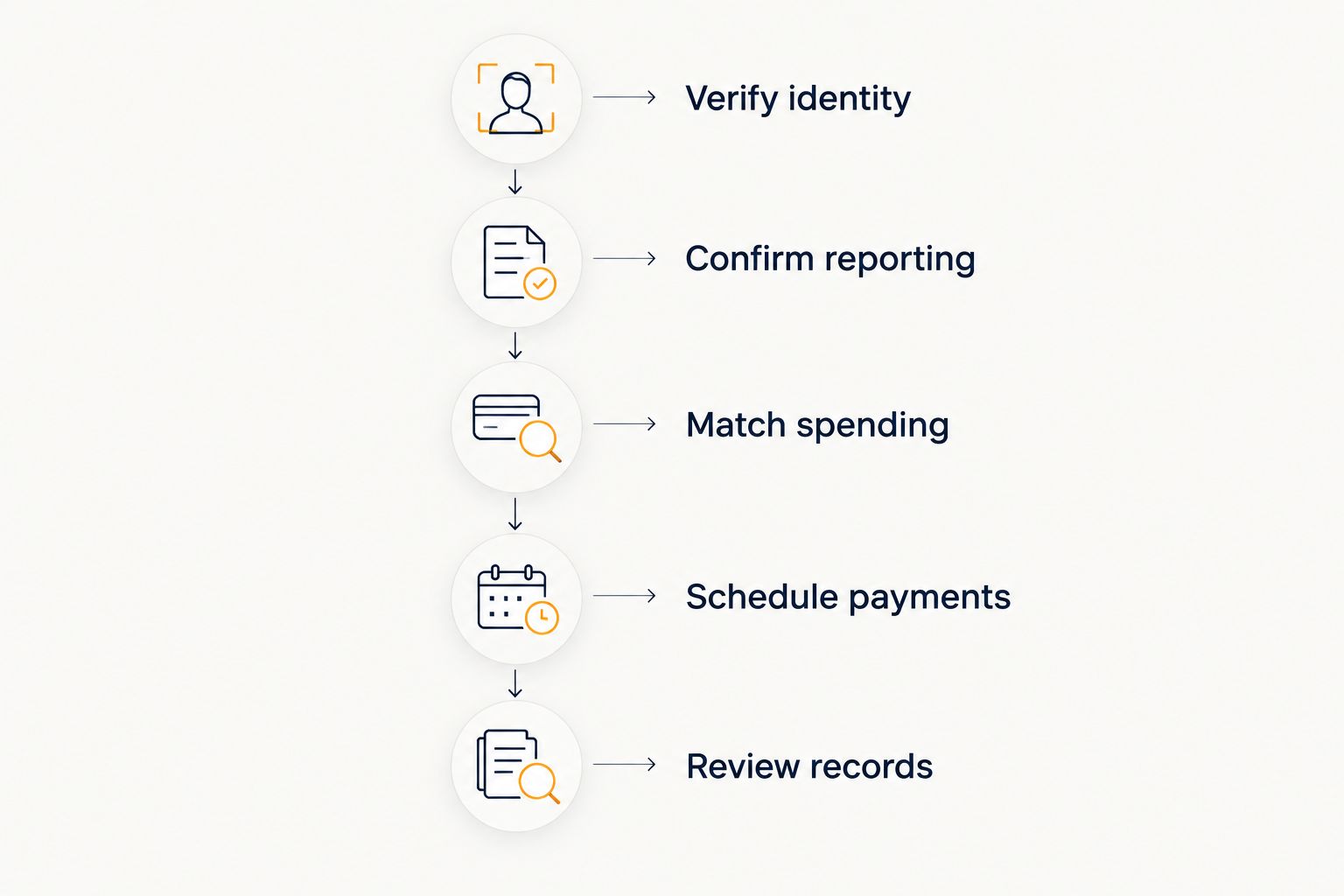
Use this sequence to avoid opening accounts before you know what they accomplish:
- Verify identity: Match your legal name, business address, and entity information across applications.
- Confirm reporting: Obtain the reporting agency names and the provider’s reporting conditions.
- Match spending: Select expenses already included in your operating budget.
- Schedule payments: Plan around statement dates, invoice deadlines, and client collections.
- Review records: Check that reported information matches the account activity.
Entity formation and banking are administrative foundations, not substitutes for repayment history. Evaluating LLC formation with banking support belongs at the identity-and-account setup stage; neither formation paperwork nor a bank account establishes that a creditor will report your payments.
Sole proprietors should also verify eligibility directly rather than assume that every program requires an LLC. Forming an entity has legal and tax consequences beyond a credit application.
What if you need working capital before your credit file develops?
Credit building and operating liquidity solve different problems. For a 2026 funding decision, compare the amount your business receives, total repayment or purchased amount, payment frequency, and obligations if revenue declines.
A term loan provides borrowed funds with contractual repayment obligations. A line of credit supports draws under an approved facility, while invoice factoring involves selling eligible invoices; each requires its own qualification and contract review.
Revenue-based financing may be structured as a purchase of future receivables rather than a loan. A factor rate is not APR: it describes a funding multiple, while APR expresses an annualized borrowing cost using the payment timing and applicable charges.
Do not assume a funding product builds business credit. Ask separately whether it reports positive payment activity, and evaluate the financing on its own economics.
Which risks should stop an application?
Stop when the seller cannot explain the reporting destination, when the required purchases have no business use, or when repayment depends on a client paying earlier than contracted. Also stop if the pitch treats a new entity or tax identification number as a replacement for underwriting.
Before committing, collect:
- The account agreement and personal guarantee language.
- Reporting policies and dispute instructions.
- Payment dates and automatic debit authorization.
- Cancellation terms and deposit-release conditions.
- A cash-flow forecast covering existing and proposed obligations.
For 2026 comparisons, keep credit-building costs separate from financing costs. An account that reports is not automatically an affordable source of capital.
FAQ
What's the best business credit building program for a freelancer?
A reporting business credit card is the default choice for recurring expenses when you can repay the statement balance. Confirm commercial reporting and personal liability before applying; reporting supplier accounts fit freelancers who already need those purchases.
Can I build business credit as a sole proprietor?
A sole proprietor can pursue business accounts that accept that business structure. Eligibility, identification requirements, guarantees, and reporting depend on the provider, so verify them before applying.
Does forming an LLC automatically build business credit?
No. Forming an LLC creates a legal entity, not a repayment history. Credit building requires account activity that reaches the relevant business credit file.
Do all net-30 accounts report business payments?
No. Net-30 describes payment terms, not a reporting commitment. Ask which commercial agency receives positive payment data and what conditions apply.
Is business credit monitoring enough to build credit?
No. Monitoring shows information within the service's coverage but does not create repayment history. Use it to check accuracy and verify whether expected accounts appear.
Will business credit building remove a personal guarantee?
No. Building business credit does not automatically release a personal guarantee or prevent a creditor from requesting one. The account agreement determines your liability.
Should I use revenue-based financing to build business credit?
Choose revenue-based financing for a justified business-funding need, not an assumed credit-building benefit. Confirm reporting separately and establish whether the contract is a loan or a purchase of future receivables.
Which approach should you choose?
Choose a reporting business credit card for existing recurring expenses, or a reporting supplier account for purchases you already need. Start with file verification if you do not know what your business record contains; wait on deposit-backed or installment products until their cash requirements fit your budget.
One last thing: an account that never reaches the credit file your intended creditor reviews cannot establish history in that file. Ask the reporting question before the application question.
Related guides
- How a 1099 contractor qualifies for business funding
- Business credit monitoring tools for growing companies
- Can a new business with no credit history get a loan?
What is your next step?
Jon Lynch Financial Group is a broker, not a direct lender. Funding is for business purposes and subject to third-party underwriting; approval, amounts, rates, decisions, and funding times are not assured.
Choose the route matching your U.S. business’s monthly revenue: at least $35,000 per month, Compare Business Funding Options; below $35,000 per month, Explore Self-Serve Funding.