Best fix and flip loan lenders in 2026
Compare fix and flip loans by draw schedules, cash required, costs, and exit terms. Start with a rehab lender, then assess bank, private, and bridge routes.

Best default for fix and flip loans in 2026: a property-focused rehabilitation lender whose draw schedule and payoff terms match your project. Best for repeat projects: a revolving acquisition-and-rehab facility; best cost-first route: a bank relationship when the property qualifies and your closing deadline allows it. The tradeoff is immediate: a loan that closes on time still fails your project if renovation funding arrives after contractors need payment.
- Compare fix and flip loans by closing cash, renovation draws, total financing cost, and exit requirements.
- Property-focused rehabilitation lenders are the default starting point for a purchase, renovation, and resale project.
- Bank financing deserves comparison when the property qualifies and the closing schedule allows it.
- Jon Lynch Financial Group is a business-funding broker, not a direct lender or a verified specialist flip lender.
Who does this fix-and-flip comparison fit?
This guide fits U.S. business-purpose investors buying a property, renovating it, and selling it to repay financing. It ranks lender types by project fit, rather than claiming that one named lender offers the best terms nationwide.
An established operating business has a separate funding decision: how to cover payroll, materials, or overhead without weakening the property project's exit. Jon Lynch Financial Group provides business-funding brokerage through third-party partners; that role is distinct from lending directly against a flip property.
Why does this matter? Acquisition financing, renovation funding, and operating capital solve different problems. Combining them without checking payment schedules and lien restrictions can leave you with enough money to close but too little cash to finish.
What makes the best fix and flip loans?
Compare these criteria before choosing a lender in 2026:
- Closing cash: Identify your equity contribution, closing deductions, reserves, and cash needed before the first renovation draw.
- Renovation draws: Check whether advances fund work before completion or reimburse work after inspection.
- Total financing cost: Request interest, lender charges, draw charges, extension terms, and early-payoff conditions in writing.
- Qualification: Match the property's condition, your experience, credit profile, liquidity, and entity structure to the lender's requirements.
- Exit requirements: Check maturity, repayment obligations, and what happens if the property does not sell on schedule.
- Project control: Review guarantees, liens, contractor requirements, and restrictions on additional borrowing.
The best lender funds the entire execution plan, not just the purchase. A larger commitment is not automatically better if access to the renovation portion depends on cash you do not have.
Which lender types belong on your shortlist at a glance?
These rankings identify where to start a comparison. They are not promises about any lender's approval, financing cost, or closing speed.
| Rank and option | Best for | Standout structure | Key limitation |
|---|---|---|---|
| 1. Property-focused rehabilitation lender | A single purchase-renovate-resell project | Acquisition and renovation financing tied to the property | Draw conditions can require cash before reimbursement |
| 2. Revolving acquisition-and-rehab facility | An experienced investor with repeat projects | A facility designed for recurring property transactions | Facility approval does not remove individual property conditions |
| 3. Bank or credit union real estate lender | A cost-first borrower with scheduling flexibility | Relationship-based real estate underwriting | Property condition and borrower requirements can exclude a deal |
| 4. Local private lender | A project needing transaction-specific negotiation | Direct negotiation of collateral and contract terms | Funding capacity and servicing arrangements need verification |
| 5. Bridge lender | A documented transition to sale or refinance | Temporary financing linked to an exit | Refinancing remains a separate approval decision |
1. When is a rehabilitation lender the best default?
A property-focused rehabilitation lender evaluates the acquisition, proposed renovation, and repayment exit together. Ask whether the proposed commitment includes both purchase funding and a renovation holdback—the portion reserved for approved construction work.
After-repair value, or ARV, means the property's estimated value after the planned renovation. It is an underwriting estimate, not a guaranteed resale result.
Rehabilitation lender pros:
- Keeps the property and renovation plan central to underwriting.
- Allows you to compare acquisition proceeds and construction funding together.
- Provides a project-specific framework for reviewing scope, draws, and completion.
Rehabilitation lender cons:
- Reimbursement-based draws require working cash.
- Inspections and documentation can interrupt access to renovation funds.
- Short maturity creates exposure if construction or sale takes longer than planned.
Best for: A defined project with a contractor scope, adequate reserves, and a credible resale exit.
Verdict: Buy only after confirming the draw process and completion cash. Use the hard money lender comparison for business real estate to examine the broader property-backed route without assuming every hard money program includes rehabilitation funding.
2. When does a revolving facility beat separate project loans?
A revolving acquisition-and-rehab facility is a structure to investigate when you repeatedly buy and renovate investment properties. Confirm that the facility specifically permits these transactions; a general business line of credit is not automatically a property acquisition facility.
Separate the facility limit from the amount actually available for a particular property. Collateral approval, advance conditions, and outstanding balances still govern access.
Revolving facility pros:
- Gives repeat investors a framework for recurring financing needs.
- Makes portfolio-level borrowing and liquidity easier to examine together.
- Supports a consistent review of project releases and repayment conditions.
Revolving facility cons:
- Individual properties can still require separate underwriting.
- Multiple unfinished projects concentrate liquidity and execution risk.
- Cross-collateralization can connect one property's problem to other assets.
Best for: An experienced operator with a documented pipeline and project-level cash tracking.
Verdict: Hold until the facility's property eligibility, release conditions, and collateral exposure are clear. Do not treat an unused headline limit as immediately spendable cash.
3. When should you compare a bank or credit union?
A bank or credit union deserves a place on your shortlist when the property and borrower fit its real estate program. Ask whether the lender finances investment-property rehabilitation and resale, rather than assuming a standard mortgage covers the plan.
For a 2026 cost-first decision, request a written proposal and compare it with property-focused financing. Do not assume a bank is cheaper without comparing the actual terms and required equity.
Bank or credit union pros:
- Adds a relationship-based financing option to the comparison.
- Lets you test whether a conventional structure fits the project.
- Encourages a full review of borrower finances and repayment capacity.
Bank or credit union cons:
- A property's condition can make the project ineligible.
- Documentation and underwriting must fit the purchase deadline.
- A lender that finances ownership does not necessarily finance speculative resale.
Best for: A borrower with strong documentation and enough scheduling flexibility to complete underwriting.
Verdict: Buy if the written offer fits both the renovation and closing requirements; otherwise skip that program. Waiting for an unsuitable loan does not improve project economics.
4. When is a local private lender a useful alternative?
A local private lender can be an individual or business negotiating a property-backed transaction directly. Evaluate the proposed contract, funding source, and servicing process—not familiarity or a verbal assurance.
Have qualified counsel review the documents before committing. A negotiated structure still needs clear obligations for disbursement, repayment, default, and lien release.
Local private lender pros:
- Provides a route for transaction-specific negotiation.
- Lets you discuss the project's scope directly with the financing counterparty.
- Makes unusual contract provisions visible before signing, if fully documented.
Local private lender cons:
- Funding capacity requires verification.
- Draw administration and servicing arrangements need explicit terms.
- Informal agreements create avoidable uncertainty about enforcement and payoff.
Best for: An investor who can evaluate a negotiated contract with legal support.
Verdict: Hold until funds, documents, servicing, and lien-release mechanics are verified. A personal relationship is not a substitute for a financeable agreement.
5. When does a bridge lender fit the exit?
A bridge loan provides temporary financing while you move toward a sale or another financing arrangement. For a flip, the critical question is whether the loan funds the property's current condition and any remaining renovation—not simply whether it is called a bridge loan.
A planned refinance is not an approved refinance. Confirm the takeout lender's requirements separately and model what happens if that financing is unavailable.
Bridge lender pros:
- Focuses the comparison on a defined transition and exit.
- Provides a structure to investigate for acquisition or interim ownership.
- Makes maturity and payoff planning central to the decision.
Bridge lender cons:
- Rehabilitation funding is not inherent in the product name.
- Extension rights depend on the contract.
- An unsuccessful sale or refinance leaves the repayment obligation unresolved.
Best for: A borrower with a documented transition and a credible backup exit.
Verdict: Buy only when the exit survives a delay; skip a structure that depends entirely on an unapproved refinance.
How were these lender types ranked?
The ranking prioritizes project fit, usable renovation cash, qualification, contractual control, and exit alignment. Property-focused rehabilitation financing is the default because acquisition and construction belong in the same decision; a revolving facility becomes more relevant as projects repeat.
Bank, private, and bridge routes earn their positions through distinct use cases. No ranking here establishes a named lender's current program terms or replaces a written offer.
How do you compare the numbers without confusing cost and cash?
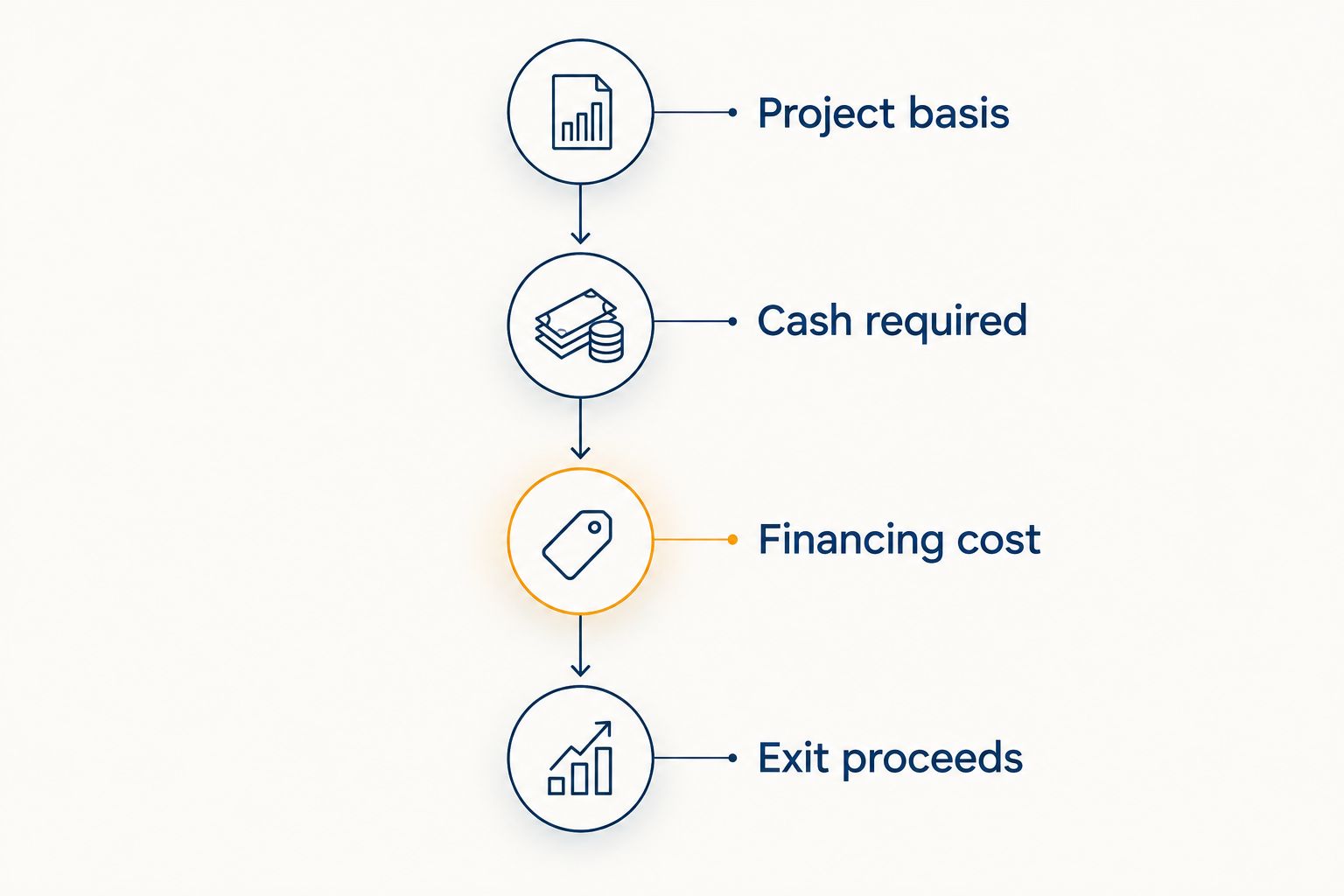
Build a project worksheet before accepting a 2026 offer. Keep these calculations separate:
- Project basis: Acquisition amount plus renovation budget and transaction expenses.
- Cash required: Equity contribution plus reserves and expenses payable before reimbursement.
- Financing cost: Interest plus financing charges and any applicable extension or payoff charges.
- Exit proceeds: Sale proceeds less selling expenses, loan payoff, and other obligations.
Loan-to-cost compares borrowing with the lender's recognized project costs. Loan-to-value compares borrowing with a specified property valuation; ask whether that valuation is current value or ARV. Different denominators make seemingly similar offers unequal.
APR expresses borrowing cost on an annualized basis, a 12-month period. It is not the same as the total dollars your project pays before sale, and a factor rate is not APR.
Jon Lynch Financial Group's primary business-funding audience generates at least $35,000 per month. The arithmetic is $35,000 per month × 12 months = $420,000 per year if monthly revenue remains constant; that annualized figure is not a separate qualification requirement or a fix-and-flip approval threshold.
What risks and alternatives deserve attention before signing?
Do not fund a speculative resale with frequent operating-business payments unless existing cash flow can support those obligations independently. Revenue-based financing may be structured as a purchase of future receivables, not a loan secured by the flip property.
Reject a structure that leaves you unable to explain these risks:
- A draw is delayed while contractor payment is due.
- The sale occurs after loan maturity.
- The renovation scope exceeds the funded budget.
- A personal guarantee exposes assets beyond the property.
- Additional borrowing violates lien or debt restrictions.
- A lower valuation reduces the expected exit proceeds.
For an established contractor or property business, operating capital can be a separate comparison. Credit remains relevant; collateral, revenue, experience, liquidity, and the proposed transaction also matter according to the specific program.
What documents should you prepare for a lender comparison?
Prepare a consistent package so each financing counterparty evaluates the same project:
- Purchase contract and property details.
- Renovation scope, contractor proposal, and schedule.
- Evidence supporting current value and the proposed resale value.
- Entity documents, ownership information, and identification.
- Relevant bank statements, financial records, and existing debt obligations.
- Project experience, reserve plan, and primary and backup exits.
Ask each lender to identify its required documents, unresolved conditions, draw procedure, and expected steps before closing. A preliminary discussion is not a final underwriting decision.
FAQ
What's the best type of lender for fix and flip loans in 2026?
A property-focused rehabilitation lender is the default starting point for a purchase-renovate-resell project. Compare the acquisition proceeds, renovation draw requirements, total financing cost, and exit conditions before choosing.
Are hard money loans and fix and flip loans the same thing?
No: hard money describes a property-backed financing approach, while fix and flip describes the project's purpose. Confirm that the specific program includes renovation funding rather than assuming it does.
Can a first-time investor get a fix and flip loan?
Eligibility depends on the lender's current program and the proposed project. Ask how experience, credit, liquidity, contractor qualifications, and property condition affect underwriting; approval is not assured.
How much cash do I need beyond the down payment?
Your required cash also includes reserves, closing obligations, and renovation expenses due before lender reimbursement. Request a written closing statement and draw procedure, then match them against the contractor's payment schedule.
Is a bank better than a private rehabilitation lender?
A bank is better only when its written terms, property eligibility, and closing requirements fit your project. A property-focused lender deserves comparison when renovation mechanics are central to the transaction.
Can revenue-based financing replace a fix and flip loan?
Revenue-based financing is not equivalent to a property rehabilitation loan. It may be structured as a purchase of future receivables, and its payment or remittance obligations must fit the operating business independently of the planned property sale.
Does Jon Lynch Financial Group directly fund fix and flip loans?
Jon Lynch Financial Group is a broker, not a direct lender. Its stated business-funding services do not establish a dedicated fix-and-flip lending program; any proposed financing remains subject to the relevant third party's underwriting and terms.
Which financing route should you choose?
Start with property-focused rehabilitation financing for a single flip, then compare a bank route if the project and deadline qualify. Repeat investors should also investigate a dedicated revolving facility; negotiated private and bridge financing require especially clear contracts and exit planning.
One last thing: ask what cash you need between closing and the first draw. That question tests whether the financing supports construction rather than merely getting you through the purchase.
Related guides
- Best bridge loan lenders for commercial real estate
- Capital stack structuring for real estate developers
- Working capital loans: costs and qualification
What is your next business-funding step?
Jon Lynch Financial Group is best for established U.S. business owners comparing business-funding structures, not investors seeking a promised property-loan approval. Products are for business purposes, and underwriting, approval, amounts, terms, decisions, and funding times depend on third-party providers.
For operating businesses generating at least $35,000 per month, Compare Business Funding Options. Below that monthly revenue level, Explore Self-Serve Funding; neither route establishes eligibility for a property-specific fix-and-flip loan.
Choose your business-funding route
Compare operating-business financing separately from property acquisition and rehabilitation debt.



