Best small business term loan lenders for medical practices 2026
Compare the best small business term loan lenders for medical practices by funding purpose, total cost, repayment fit, guarantees, and underwriting.

Best overall fit: a healthcare-focused bank for a planned practice investment. Best for an established banking relationship: your current business bank. Best for an eligible practice acquisition: an SBA-participating lender. The best small business term loan lenders for medical practices in 2026 are the ones whose repayment terms fit actual collections—not merely billed revenue.
- The best small business term loan lenders for medical practices match repayment to collections and the investment’s useful life.
- Healthcare-focused banks suit planned practice investments; SBA-participating lenders deserve consideration for eligible acquisitions.
- Jon Lynch Financial Group is a broker, not a direct lender, for owners comparing business funding options.
- Compare net proceeds, total payments, payment frequency, guarantees, and early-payoff terms before signing.
Why does the lender choice matter for a medical practice?
Your practice must make payments from collected cash, even when insurance claims remain unpaid. A loan that works against annual profit can still strain the account on payroll day.
For owners comparing several structures, Jon Lynch Financial Group provides a business-funding comparison route through third-party partners. A term loan, revolving credit facility, and purchase of future receivables are different contracts; do not treat them as interchangeable.
What makes the best lender for your medical practice?
Use these criteria before comparing lender names or accepting a proposal:
- Purpose fit: Match acquisition, renovation, equipment, or working capital to a suitable financing structure.
- Collection fit: Test payments against deposited revenue, payer delays, and existing obligations.
- Total-dollar clarity: Request net proceeds, all scheduled payments, fees, and any final balloon payment.
- Underwriting fit: Ask how the lender evaluates credit, profitability, ownership, existing debt, and practice history.
- Contract flexibility: Review collateral, personal guarantees, prepayment terms, and restrictions on additional borrowing.
- Timing fit: Establish documentation and closing requirements before committing to a vendor or seller.
A medical license does not replace financial underwriting. Your clinical credentials explain who operates the practice; financial records show how the practice will repay financing.
Which lender routes deserve a place on your shortlist?
This 2026 ranking is organized by financing need, not by an unsupported claim that one institution approves more practices than another. The categories overlap: a healthcare-focused bank can also offer SBA financing or equipment loans.
| Rank and lender route | Best for | Standout consideration | Key limitation |
|---|---|---|---|
| 1. Healthcare-focused bank | Planned practice expansion | Experience evaluating practice-specific transactions | Specialty focus does not remove underwriting requirements |
| 2. Existing business bank | Established, profitable practices | An existing account relationship and transaction history | Familiarity does not establish eligibility |
| 3. SBA-participating lender | Eligible practice acquisitions | Government-guaranteed business lending structure | Program eligibility and documentation requirements apply |
| 4. Equipment lender | A defined equipment purchase | Financing tied to an identifiable asset | Does not necessarily cover unrelated operating needs |
| 5. Nonbank term lender | A documented need after a bank decline | Another underwriting route to compare | Payment frequency and total cost require close review |
1. Healthcare-focused bank: best for planned practice expansion
A healthcare-focused bank is a sensible first inquiry when you are expanding an established practice. Ask whether the specific team handles your specialty, ownership structure, and intended transaction rather than assuming a general healthcare label establishes fit.
Bring a clear project budget. Separate construction, equipment, recruitment, and operating reserves so the lender can assess each use.
Healthcare-focused bank pros:
- Provides a focused starting point for practice-related financing discussions.
- Lets you evaluate financing against a defined expansion plan.
- Gives you an opportunity to discuss different financing structures together.
Healthcare-focused bank cons:
- Healthcare specialization does not establish approval or favorable terms.
- An expansion dependent on unproven collections still needs careful cash-flow analysis.
Best for: An established practice planning a project before expenses become urgent.
Verdict: Buy only when the written offer fits the project and collection forecast.
2. Existing business bank: best for a proven banking relationship
Your current business bank is a useful comparison point because it already holds your account relationship. Ask for a term-loan assessment, but expect requests for financial statements, tax information, and other underwriting documents.
An account balance is not the same as repayment capacity. Explain unusual deposits, owner transfers, and existing loan proceeds rather than presenting every deposit as practice revenue.
Existing business bank pros:
- Gives you a direct starting point through an established relationship.
- Creates a benchmark against which to assess outside offers.
- Lets you discuss borrowing alongside existing treasury arrangements.
Existing business bank cons:
- An existing account does not establish credit approval.
- The bank’s lending criteria can exclude an otherwise operating practice.
Best for: A practice with organized financials and a banking relationship it wants to retain.
Verdict: Buy if the bank’s complete proposal wins on fit—not familiarity alone.
3. SBA-participating lender: best for an eligible practice acquisition
An SBA loan is made by a participating lender with a government guarantee supporting the lender under program rules. The guarantee does not erase your repayment obligation or replace lender underwriting.
For a practice acquisition, ask the lender to review the transaction structure early. Purchase terms, ownership, intended uses, and financial documentation all need attention before you make financing-dependent commitments.
SBA-participating lender pros:
- Offers a program-based route for eligible business financing.
- Deserves consideration when comparing acquisition funding structures.
- Supports a detailed review of the business and proposed transaction.
SBA-participating lender cons:
- Both program eligibility and lender underwriting apply.
- Documentation and closing requirements must fit the seller’s deadline.
Best for: An eligible acquisition with a seller willing to accommodate the financing process.
Verdict: Hold purchase commitments until the lender confirms the financing path and conditions.
4. Equipment lender: best for a defined clinical equipment purchase
An equipment lender evaluates financing tied to an identifiable asset. Compare a loan with any lease proposal carefully: ownership, end-of-term obligations, and exit terms can differ.
Separate the machine’s purchase from installation, training, maintenance, and working capital. Ask which expenses the proposed agreement actually covers.
Equipment lender pros:
- Connects the financing decision to a specific asset.
- Makes it easier to compare a purchase with an equipment lease.
- Encourages a useful-life review before taking on debt.
Equipment lender cons:
- The equipment can serve as collateral under the agreement.
- Financing the asset does not solve an unrelated payroll shortfall.
Best for: A practice purchasing equipment with a clear operating purpose and budget.
Verdict: Buy when ownership terms, useful life, and payments support the investment.
5. Nonbank term lender: best for comparing options after a bank decline
A nonbank term lender offers a lending route outside a traditional bank. First confirm that the proposal is actually a loan with a stated repayment obligation—not a receivables purchase presented with loan-like language.
Ask what caused the bank decline. Another financing source does not correct a practice whose available cash cannot support additional payments.
Nonbank term lender pros:
- Adds a distinct proposal to your comparison after a bank decline.
- Lets you assess another lender’s underwriting criteria.
- Creates a comparison point against receivables-based funding.
Nonbank term lender cons:
- Frequent payments can conflict with uneven insurance collections.
- A manageable-looking payment can obscure the total-dollar obligation.
Best for: A practice with a defined funding use and demonstrated repayment capacity.
Verdict: Skip any offer whose payment burden fails your collection forecast.
How should you compare the numbers in 2026?
Use the same worksheet for every proposal: gross funding, net proceeds, total payments, payment frequency, term, and early-payoff amount. The small business term loan cost guide provides additional context for that comparison.
For an illustrative example—not an offer, assume a loan has these terms:
- Gross principal: $100,000.
- Fee withheld at funding: $2,000.
- Net proceeds: $100,000 − $2,000 = $98,000.
- Repayment: 48 monthly payments of $2,400.
- Total scheduled payments: 48 × $2,400 = $115,200.
- Total financing cost relative to usable proceeds: $115,200 − $98,000 = $17,200.
This example assumes no additional charges or balloon payment. The monthly payment alone does not reveal the cost: your practice receives $98,000 but pays $115,200 over the schedule.
APR, or annual percentage rate, expresses borrowing cost on an annualized basis. A factor rate is a multiplier used to calculate an obligation; it is not APR, and converting it requires the timing and amounts of cash flows.
Does the payment survive a collection delay?
Build a cash forecast showing collections, payroll, rent, taxes, existing debt, and the proposed payment. Move a meaningful expected insurance receipt into a later period and check whether the account still covers required outflows.
Use actual collections rather than assuming every claim converts to cash on schedule. If the payment works only when every receipt arrives as expected, reduce the project, change the structure, or wait.
When is a term loan the wrong structure?
A term loan supplies a lump sum repaid under an agreed schedule. That suits a defined investment better than an undefined, recurring cash deficit.
Compare these alternatives before committing:
| Structure | Best for | Advantage | Main drawback |
|---|---|---|---|
| Business line of credit | Recurring, uneven operating needs | Draw-based access under the agreement | Limits, renewal conditions, and repayment terms require review |
| Equipment financing | A specific asset purchase | Aligns the agreement with equipment | Asset restrictions and ownership terms matter |
| Purchase of future receivables | Comparing business-purpose funding against future receipts | Offers a structure distinct from a conventional loan | Remittances, reconciliation, and contractual obligations need careful review |
| Delaying or reducing the project | An investment without adequate repayment capacity | Avoids adding an unaffordable obligation | Postpones the intended business benefit |
Revenue-based financing can be structured as a purchase of future receivables, often called a merchant cash advance or MCA. Do not assume remittances automatically adjust when revenue drops; read the reconciliation provisions and required procedures.
For a 2026 decision, compare contract mechanics rather than relying on labels such as “flexible” or “unsecured.” Neither word establishes affordability or removes personal obligations.
What risks should stop an application or acceptance?
Stop before signing if the practice cannot explain how the financing will be repaid. A bank decline deserves diagnosis, not an automatic move to another obligation.
Review these warning signs:
- Collection shortfall: Deposited revenue does not cover operating expenses and existing payments.
- Debt stacking: New payments overlap with obligations missing from the application.
- Unclear payoff: The agreement does not make early settlement costs understandable.
- Guarantee exposure: Owners have not reviewed personal guarantees and collateral provisions.
- Unsupported projections: Repayment depends entirely on patients or contracts not yet secured.
Credit matters. Ask each lender how personal and business credit affect underwriting, whether an inquiry is involved, and whose authorization is required.
What documents should you prepare next?
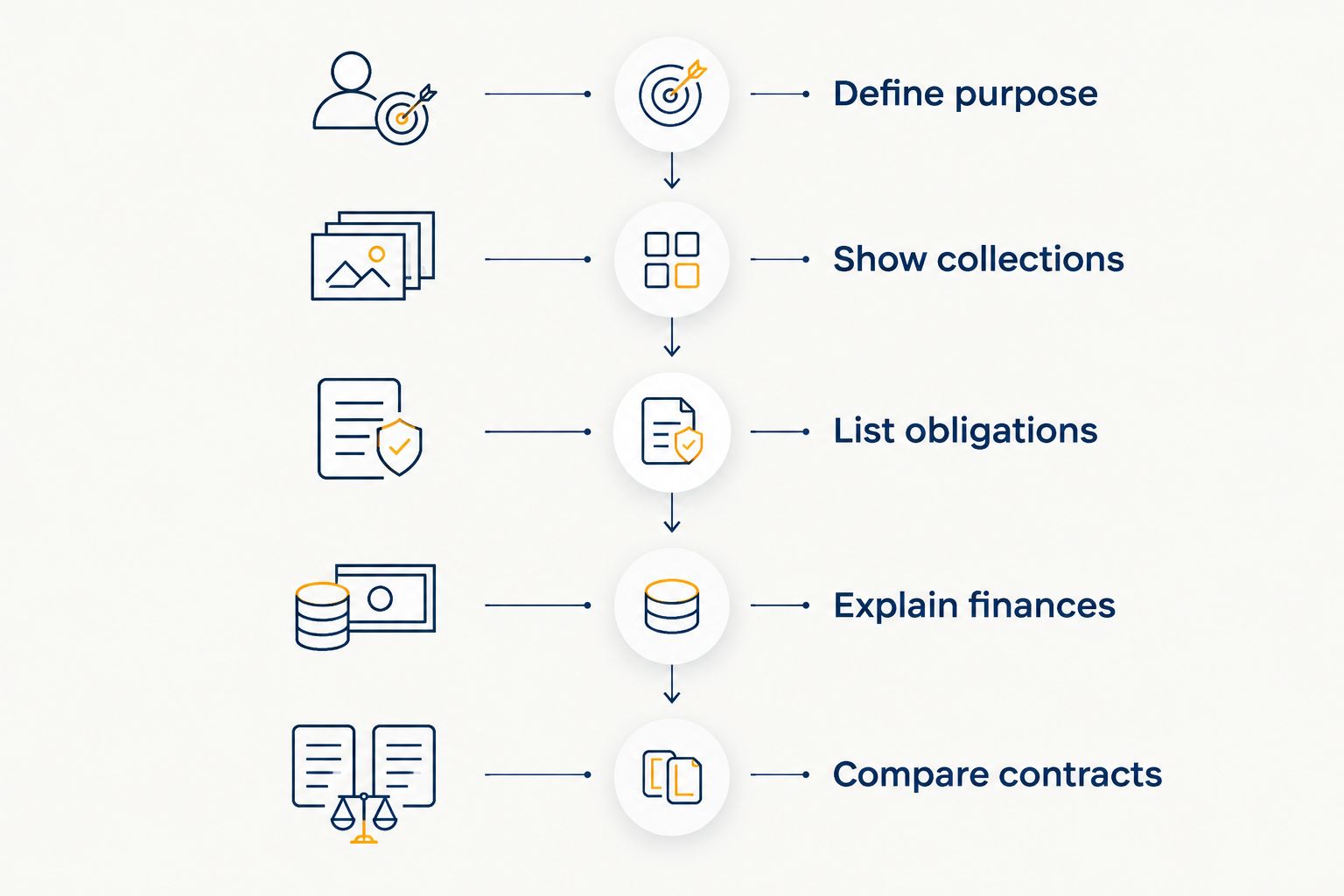
Organize the application around the transaction rather than sending an unexplained folder of statements. Confirm each lender’s current requirements before submitting sensitive information.
- Define purpose: State the business use and requested amount.
- Show collections: Prepare bank statements and an accounts-receivable aging report.
- List obligations: Include loans, leases, receivables purchases, liens, and required payments.
- Explain finances: Prepare financial statements, tax records, ownership information, and relevant licenses.
- Compare contracts: Request written terms and identify outstanding underwriting conditions.
Keep patient information out of a general funding application. Ask what financial information is necessary and use the recipient’s designated secure submission process.
How were these lender routes ranked?
The ranking prioritizes purpose fit, collection fit, cost clarity, underwriting fit, contract terms, and timing. It is a decision framework for 2026—not a claim about approval rates, lender performance, or a tested list of individual institutions.
Start with planned bank financing when the transaction permits it. Move to another route because the structure fits better, not because a marketing headline sounds faster.
FAQ
What are the best small business term loan lenders for medical practices?
Start with a healthcare-focused bank, your existing business bank, or an SBA-participating lender according to the transaction. Compare written offers by net proceeds, total payments, repayment schedule, guarantees, and eligibility rather than selecting by name alone.
Is an SBA loan better for buying a medical practice?
An SBA loan deserves comparison for an eligible practice acquisition, but it is not automatically the best offer. Program eligibility, lender underwriting, transaction requirements, and the seller’s deadline all matter.
Can a medical practice get financing after a bank decline?
A bank decline does not determine every other provider’s decision. Identify the reason for the decline and confirm repayment capacity before comparing another loan or a receivables purchase; approval remains subject to underwriting.
Is a merchant cash advance the same as a term loan?
No. An MCA can be structured as a purchase of future receivables rather than a loan. Review remittance terms, reconciliation procedures, guarantees, and total contractual obligations before comparing it with a term loan.
Does Jon Lynch Financial Group lend directly to medical practices?
Jon Lynch Financial Group is a broker, not a direct lender. Business-purpose funding is provided through third-party partners and remains subject to their underwriting and product terms.
Does a medical practice owner’s credit matter?
Yes, personal or business credit can affect underwriting depending on the provider and product. Ask how credit is evaluated, what inquiry is required, and whether a personal guarantee applies.
What should a practice below $35,000 in monthly revenue do?
Explore Self-Serve Funding is the designated route for U.S.-based entrepreneurs below $35,000 in monthly revenue. Applicants securely connect bank statements through Plaid for an automated decision; approval and funding are not assured.
Which route should you choose in 2026?
Default to a bank term-loan comparison for a planned investment; compare SBA financing for an eligible acquisition and equipment financing for a defined asset. Reject any proposal that depends on uninterrupted collections to remain affordable.
Jon Lynch Financial Group is best for established U.S. business owners comparing business-funding structures through a broker rather than applying only to one direct lender. Products are for business purposes and subject to third-party underwriting; approval, amounts, rates, decisions, and funding times are not assured.
Related guides
- Working capital loans for dental and medical practices
- Business line of credit lenders
- Working capital costs versus a term loan
What is the one last check before you apply?
Ask for the payoff calculation as well as the payment schedule. A lower payment does not establish a lower total cost, and early repayment does not establish savings unless the contract provides them.
Choose your next step by monthly business revenue: at least $35,000 per month: Compare Business Funding Options. Below $35,000 per month: Explore Self-Serve Funding.