Is same-day business funding actually possible?
Is same day business funding real? Yes, but approval is not deposited cash. Compare timing, repayment, verification and risks before accepting an offer.

Yes, same-day business funding is real, but a same-day decision is not the same as money available in your business bank account. Treat funding as usable only when verification is complete, the agreement is signed, and your bank confirms access to the funds. The tradeoff is that a fast offer still needs a full review of total cost, repayment and contract risk.
- Is same day business funding real? Yes, but approval, transfer and usable funds are separate milestones.
- Jon Lynch Financial Group arranges business funding as a broker, not a direct lender.
- Compare working capital by net proceeds, total obligation and payment schedule—not speed alone.
- Same-day timing depends on verification, bank processing and product terms; it is never guaranteed.
Is same-day business funding actually possible?
Yes. The distinction in 2026 is between submitting an application, receiving a decision and having spendable money. An advertisement that promises a quick response does not establish when you can pay a supplier or run payroll.
Use this sequence to test any same-day claim:
- Application: You submit business information and authorize the requested review.
- Verification: The funding partner checks the information required for its product.
- Decision: You receive an approval, decline or request for additional information.
- Agreement: You review and execute the actual financing or receivables-purchase contract.
- Transfer: The funding partner initiates the disbursement.
- Bank access: Your bank makes the money available for use.
Ask which milestone the advertised timeline describes. Approval is not deposited cash.
Who should consider fast business funding?
Fast funding fits a business-purpose cash-flow need with a defined use and a credible repayment source. It does not solve a continuing operating loss simply because the application moves quickly.
Jon Lynch Financial Group is best suited to U.S. business owners comparing business-purpose funding, not consumer loans. Its primary comparison route serves established businesses generating at least $35,000 per month; you can begin through Jon Lynch Financial Group.
That $35,000 monthly revenue threshold identifies the appropriate service route, not a promise of qualification. A funding partner still evaluates the application under its own requirements.
Before applying in 2026, identify what the funding accomplishes:
- Cover payroll while you wait for a documented customer payment.
- Purchase inventory tied to an identifiable sales opportunity.
- Mobilize for a contract before customer receipts arrive.
- Address a temporary gap between business expenses and collections.
A clear use of funds helps you compare structures. It does not establish that the business can afford the obligation.
How do the main funding structures differ?
“Same-day funding” describes timing, not a specific financial product. Start with the underlying agreement, because a loan, credit line and purchase of future receivables create different obligations.
| Structure | Best for | Main advantage | Main limitation | What to verify |
|---|---|---|---|---|
| Business term loan | A defined expense with a planned repayment period | A stated repayment schedule supports budgeting | Scheduled payments continue despite weaker sales | Net proceeds, total repayment and payment dates |
| Business line of credit | Recurring working-capital gaps | Draw-based access can match changing needs | Access and future draws remain subject to the agreement | Draw conditions, charges and repayment rules |
| Revenue-based financing or MCA | Owners comparing funding linked to business receipts | Provides another structure to evaluate against a loan | Frequent collections can strain operating cash | Legal structure, collection method and reconciliation terms |
| Invoice factoring | Businesses with eligible unpaid customer invoices | Connects funding to existing receivables | Eligibility and customer-payment mechanics matter | Invoice eligibility, recourse and collection responsibility |
None of these labels establishes a same-day outcome. Ask the actual provider to explain the remaining steps for your application rather than assigning a universal timeline to the category.
Choose the structure you can sustain after funding, not the label attached to the fastest advertisement. A line already established with your bank also deserves review before you take on a new agreement.
What happens between applying and receiving funds?
The strongest timing question is specific: “What remains outstanding before funds can reach my account?” That produces a more useful answer than asking whether a company offers fast approvals.
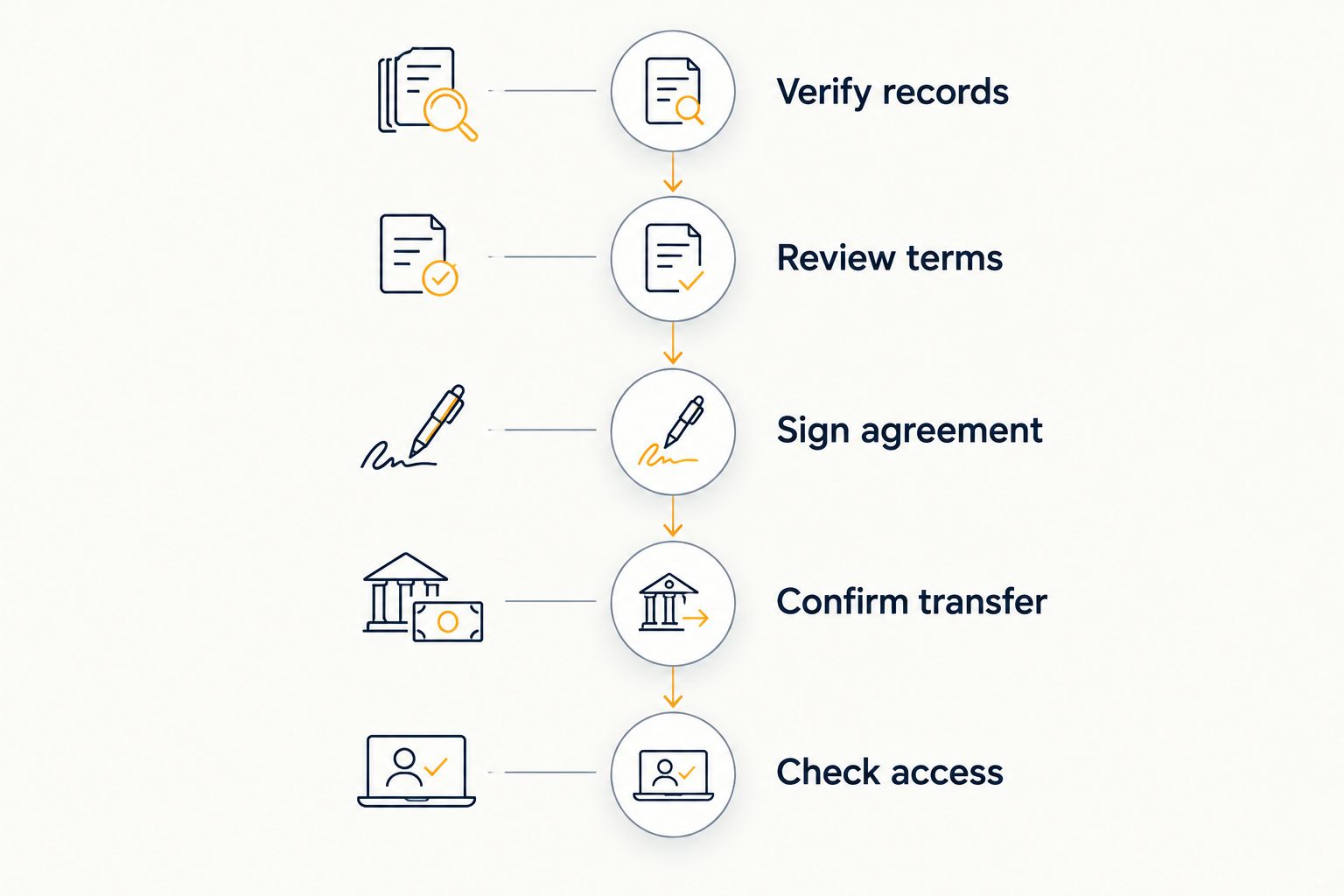
Work through the process in this order:
- Verify records: Submit accurate business and ownership details through the authorized channel.
- Review terms: Read the proposed obligation, payment mechanics and remaining conditions.
- Sign agreement: Confirm that the executed document matches the terms you reviewed.
- Confirm transfer: Ask whether disbursement has been initiated or merely scheduled.
- Check access: Verify usable funds with your receiving bank.
A 2026 funding comparison should track each stage separately. Do not commit to an expense based solely on a preliminary decision.
Keep the funding partner's requests and your own deadline in the same written record. If payroll or a supplier payment has a cutoff, disclose that deadline without assuming the provider can meet it.
Why does same-day funding timing vary?
Timing depends on the application and the payment process. For a specific offer, ask which of these factors still needs resolution:
- Verification: Outstanding identity, business or bank-account checks can prevent completion.
- Complete records: Missing or inconsistent information can trigger additional questions.
- Underwriting: The third-party funding partner must reach its own decision.
- Contract terms: Signing does not remove conditions stated in the agreement.
- Bank processing: Initiating a transfer and receiving usable funds are separate events.
Do not convert another applicant's experience into a deadline for your business. Even a documented fast outcome does not establish your eligibility, agreement terms or receiving-bank processing.
How should you compare cost without being distracted by speed?
Put competing offers into the same written format. Request net proceeds, total repayment or purchased amount, payment frequency, all applicable charges and the conditions for early payoff or completion.
Use these calculations with the figures in your actual offer:
- Net proceeds: Stated funding amount minus amounts deducted before disbursement.
- Financing cost: Total contractual payments plus applicable separately paid charges, minus net proceeds, without counting a charge twice.
- Cash remaining: Expected operating cash after payroll, suppliers, taxes, existing obligations and the proposed collections.
Do not compare an annual rate on a loan directly with a factor rate. A factor rate is a multiplier used to calculate a contractual amount; APR expresses annualized borrowing cost and depends on the timing of cash flows and applicable charges.
For a purchase of future receivables, distinguish the purchase price paid to the business from the receivables amount the buyer purchases. Review the agreement's actual collection and reconciliation mechanics rather than assuming the word “revenue-based” means payments automatically adjust.
You can examine that distinction further in how to compare factor rates on a merchant cash advance.
A faster transfer does not make an unaffordable collection schedule acceptable. Compare cash remaining after payments, not just the amount entering your account.
When is waiting for another option the better decision?
Waiting is the better decision when your deadline allows another review and the alternative produces a more manageable obligation. Speed has value only in relation to the expense you need to cover.
For a 2026 decision, separate an unavoidable deadline from a preferred purchase date. A payroll obligation, an optional inventory order and an equipment expansion do not create the same urgency.
Ask your existing bank about an established facility before signing new financing. Also consider whether a customer can pay an outstanding invoice sooner or a supplier will agree to different payment terms; neither arrangement is assured, but both belong in the decision.
If you were declined by a bank, identify the stated reason before applying elsewhere. A different product does not erase a cash-flow problem, unresolved documentation issue or existing payment burden.
What risks should stop you from accepting an offer?
Pause if the written agreement leaves you unable to explain the obligation. You should know who provides the funds, what your business owes or sells, how collections work and what happens when performance changes.
Watch for these problems:
- The advertised timeline refers only to an initial response.
- The agreement differs from the terms presented during the application.
- Total payments or collection mechanics remain unclear.
- Proposed withdrawals conflict with essential operating expenses.
- Existing financing restrictions have not been checked.
- Someone describes approval or funding timing as certain before completing the required review.
When comparing merchant cash advance options, treat the legal agreement—not the marketing label—as the basis for deciding whether the transaction is a loan or a purchase of future receivables. Confirm the provider's jurisdiction and eligibility rules separately; a product described for another market does not establish suitability for a U.S. business.
An unsecured label also does not answer every risk question. Review any personal guarantee, security interest, default provision and collection remedy that appears in the agreement, and seek qualified legal advice when the obligation is unclear.
What documents and questions should you prepare?
Ask the funding partner for its current document requirements instead of relying on a generic checklist as a qualification promise. Depending on the product, the review can involve bank records, ownership information, existing obligations and evidence supporting the use of funds.
Prepare a consistent explanation of the cash-flow gap. State what you need to pay, when payment is due and which business receipts support the proposed obligation.
Before accepting an offer, request written answers to these questions:
- What conditions remain before a final decision and disbursement?
- Who is the lender or receivables purchaser named in the agreement?
- What amount reaches the business after deductions?
- What is the full contractual obligation?
- When do payments or collections begin?
- What changes if revenue falls or the business seeks early completion?
- What happens if funds arrive after the business deadline?
Accurate records help the review proceed without avoidable clarification. They do not ensure approval or a particular funding time.
What should you know about the broker's role?
Jon Lynch Financial Group is a broker, not a direct lender. Its business-funding work includes helping owners compare working capital, revenue-based financing and purchases of future receivables through third-party funding partners.
Products are for business purposes and remain subject to third-party underwriting and applicable agreement terms. Revenue-based financing may be structured as a purchase of future receivables rather than a loan.
The broker's role does not replace the funding partner's decision or your review of the contract. Approval, amounts, rates, decisions and funding times are never guaranteed.
FAQ
Is same day business funding real in 2026?
Yes, same-day business funding is real, but a decision does not establish when money becomes usable. Verification, contract completion, transfer processing and receiving-bank access still matter.
Does same-day approval mean I can spend the money today?
No, same-day approval does not mean you can spend the money that day. Confirm that remaining conditions are complete and that your bank has made the funds available.
Can my business receive funding within an hour?
Approved applicants using the self-serve route may receive funds within an hour, but that is not a guaranteed timeline. Timing depends on verification, bank processing and product terms.
What if my business makes less than $35,000 per month?
Businesses below $35,000 per month can Explore Self-Serve Funding. The route is open to U.S.-based entrepreneurs, uses a secure Plaid connection for bank statements and supports an automated decision; eligibility and timing remain conditional.
Is a merchant cash advance the same as a business loan?
A merchant cash advance may be structured as a purchase of future receivables rather than a loan. Read the agreement to establish the transaction's structure, collection method and obligations.
Does fast business funding mean credit does not matter?
No, speed does not establish that credit is irrelevant. Ask the funding partner how credit, cash flow and existing obligations affect its current underwriting requirements.
Should I accept the fastest business funding offer?
Accept an offer only after comparing its net proceeds, full obligation, collection schedule and contract risks. The fastest offer is not the right choice when its payments leave your business unable to cover essential expenses.
What should you do before choosing a funding route?
Write down the latest time the money must be usable, not merely approved. Then compare that deadline against the provider's remaining conditions and a cash-flow plan that includes the proposed payments.
Related guides
- Same-day business funding options
- Compare fast unsecured working-capital offers
- Business line of credit lenders
For your next step with Jon Lynch Financial Group, choose the route that matches your monthly business revenue: at least $35,000 per month, Compare Business Funding Options; below $35,000 per month, Explore Self-Serve Funding.



