Can you apply to multiple lenders for funding at once?
apply multiple lenders same time business funding: yes. Compare offers, check credit permissions, and avoid duplicate submissions or conflicting commitments.

Yes—you can apply to multiple lenders for business funding at the same time in 2026, but keep each submission coordinated and disclose existing obligations. Comparing offers is different from accepting overlapping financing: check credit-pull permissions, application terms and restrictions on additional funding before you proceed.
- Apply multiple lenders same time business funding: compare offers without confusing applications with commitments.
- Jon Lynch Financial Group serves U.S. business owners comparing working capital through third-party funding partners.
- Confirm credit-pull permissions and submission destinations before authorizing applications.
- Disclose existing obligations and pending funding before signing or accepting additional capital.
Can you apply to multiple lenders for funding at once?
Yes. You can compare business-funding applications concurrently, provided you follow each application's terms and give accurate information about your finances. The practical goal is competing offers—not duplicate submissions or undisclosed obligations.
Start with a defined funding need and a record of where your application goes. Jon Lynch Financial Group is a broker, not a direct lender; third-party lenders and funders make underwriting decisions and set product terms.
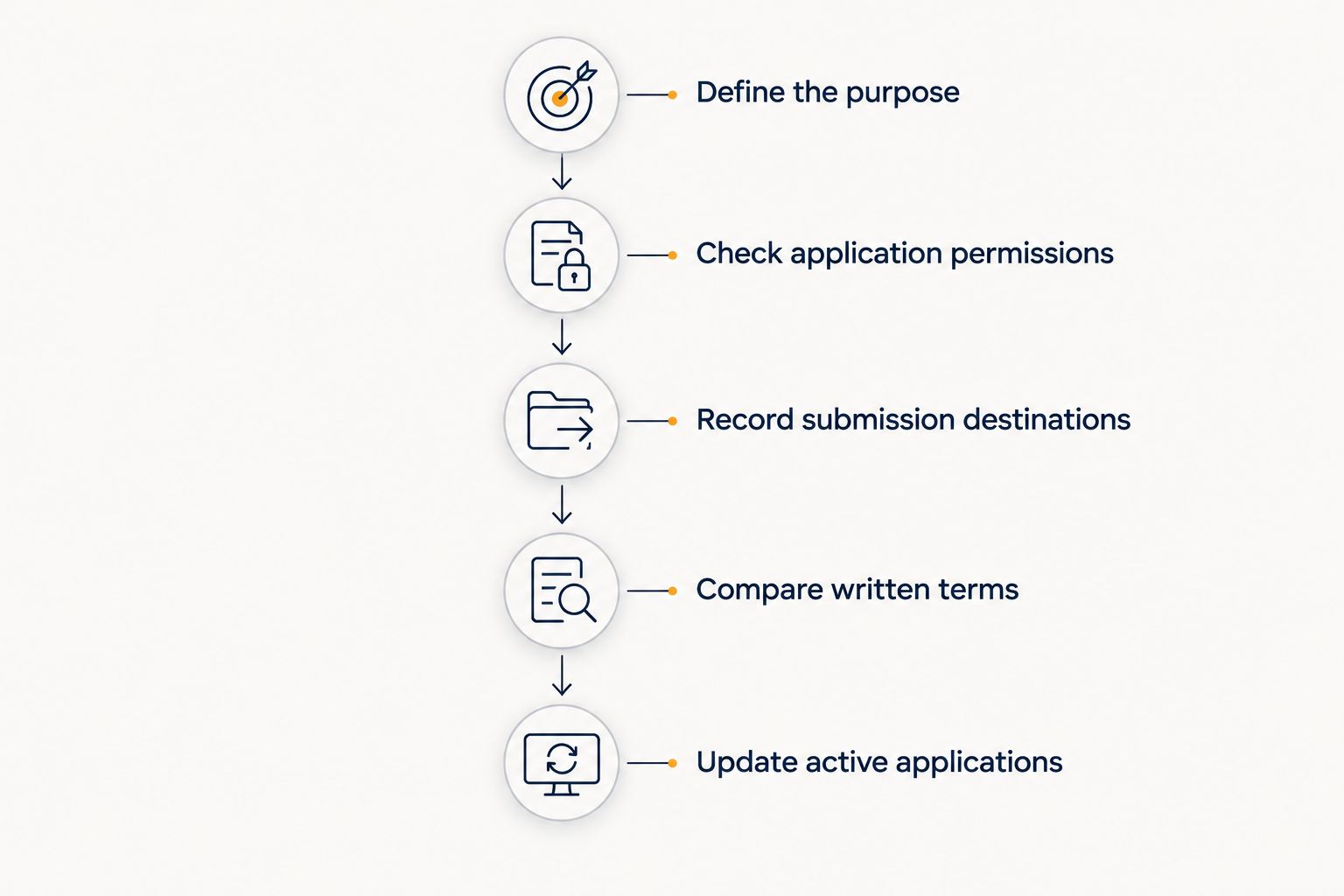
Use this process for your 2026 funding search:
- Define the purpose. Identify the cash-flow gap, inventory purchase, payroll requirement or other business expense the funding must cover.
- Check application permissions. Ask whether the initial review involves a personal or business credit inquiry and what further authorization is required.
- Record submission destinations. Identify the actual lender or funder, not just the website or intermediary collecting your information.
- Compare written terms. Review net proceeds, total contractual obligation, payment frequency and conditions before choosing.
- Update all active applications. Disclose newly accepted funding, then withdraw applications you no longer intend to pursue.
Do not treat an application, preliminary indication, approval and signed agreement as interchangeable. Read the documents attached to each stage before deciding what you have authorized.
Who benefits from comparing several funding sources?
Comparing sources fits business owners who know their funding purpose and can evaluate competing terms before committing. It is especially useful when you need to choose between a payment schedule that fits your cash flow and a structure that places less pressure on operating cash.
Jon Lynch Financial Group is best for U.S. business owners generating at least $35,000 per month who want to compare business funding. That figure identifies the primary service audience; it is not a promise of eligibility or approval.
Businesses below $35,000 per month have a separate self-serve funding route. Neither route removes third-party underwriting or makes credit, revenue trends and existing obligations irrelevant.
Why does this matter for your cash flow?
An offer can solve today's cash shortage while creating a repayment problem later. Comparing applications helps only when you examine what leaves your bank account after funding—not just what arrives.
A bank decline also does not identify the right alternative by itself. Find out whether the problem involves repayment capacity, documentation, credit, collateral or another program requirement before submitting substantially the same request elsewhere.
Should you apply directly, use a broker or take a self-serve route?
Choose the application route around the decision you need help making. Direct applications give you a separate relationship with each provider; a broker helps you compare options through its funding relationships; a self-serve route uses an automated application process.
| Application route | Best for | Main benefit | Main limitation | What to verify |
|---|---|---|---|---|
| Direct applications | Owners who want to manage each provider relationship | You communicate directly with each lender or funder | You manage separate document requests and application updates | Credit permissions, product fit and current underwriting requirements |
| Broker-assisted comparison | Owners who want help comparing different funding structures | A broker supports the comparison across its third-party funding relationships | A broker is not the funding decision-maker and does not represent every provider | Submission destinations, compensation disclosures and final provider terms |
| Self-serve application | Owners who prefer an automated funding path | You can complete an online application process from home | Automated review does not guarantee eligibility or a suitable offer | Data permissions, verification requirements and the resulting agreement |
For the self-serve route, applicants securely connect bank statements through Plaid for an automated decision. Timing depends on verification, bank processing and product terms; do not organize a payroll or supplier commitment around an assumed funding time.
Choose a route for comparison quality, not the number of places willing to collect your application. More submissions do not establish that an offer fits your business.
How do you prevent duplicate applications?
Keep a submission register before you authorize distribution. Record the intermediary, actual funding provider, submission date, credit authorization, requested documents and current status.
Ask each intermediary where your application will go and how to stop further distribution. If you also apply directly, disclose those destinations so the same provider does not receive conflicting versions of your request.
Use one consistent set of financial records. Differences in stated revenue, ownership, existing balances or funding purpose need an explanation—not a separate version tailored to each application.
Before sending another application, confirm whether it reaches a genuinely different funding source. Another website or salesperson does not necessarily mean another underwriting destination.
Will applying to multiple business lenders hurt your credit?
Multiple applications can affect personal credit when they generate hard inquiries on your personal credit report. A soft inquiry does not affect your credit score, but you must confirm which inquiry the provider intends to make.
Do not assume business-funding inquiries receive the same rate-shopping treatment as mortgage or auto-loan inquiries. Ask about the credit review at the initial application stage and again before authorizing any later review.
Your 2026 application checklist should distinguish:
- Personal credit: whether the owner’s consumer report is accessed and whether the inquiry is hard or soft.
- Business credit: which business information the provider reviews.
- Further authorization: whether moving from an initial review to underwriting requires another inquiry.
- Reporting: whether the resulting account or a default is reported, and to whom.
Credit inquiries and repayment reporting are separate questions. Review the guide to whether a merchant cash advance affects personal credit before treating a business-purpose application as unrelated to your personal finances.
What should you compare before accepting an offer?
Put written offers into the same worksheet. An attractive headline amount means little without the amount you actually receive, the full contractual obligation and the collection schedule.
| Comparison field | What to record | Why it matters |
|---|---|---|
| Net proceeds | Funds delivered after disclosed deductions or payoffs | Shows what is available for the business purpose |
| Total obligation | Total scheduled repayment or purchased receivables amount, plus applicable charges | Makes the contractual dollar commitment visible |
| Collection schedule | Frequency, amount or percentage, and adjustment terms | Shows pressure on operating cash |
| Timing | Outstanding conditions and expected processing steps | Separates an indication from completed funding |
| Security and guarantees | Collateral, lien and personal-guarantee provisions | Identifies assets and obligations at risk |
| Early exit | Payoff method and any contractual reduction or charge | Shows whether paying early changes the obligation |
| Additional funding | Restrictions, disclosure duties and consent requirements | Helps prevent incompatible commitments |
A factor rate is a multiplier used to calculate a contractual amount; it is not an annual percentage rate. APR expresses borrowing cost on an annualized basis, so a factor rate alone does not provide an apples-to-apples comparison with a loan APR.
Revenue-based financing may be structured as a purchase of future receivables rather than a loan. When evaluating a merchant cash advance, read the actual agreement for the purchased amount, collection method, reconciliation provisions and default terms.
Do not assume an early payoff reduces a receivables-purchase obligation. Verify the written terms before treating a shorter expected repayment period as a financial benefit.
Why do funding offers vary between providers?
Different providers can reach different decisions using the same application. For a 2026 comparison, separate these drivers instead of assuming every difference reflects a better or worse offer:
- Product structure: A term loan and a purchase of future receivables create different contractual obligations.
- Cash-flow assessment: Revenue patterns and existing payments affect the assessment of repayment capacity.
- Credit assessment: Providers evaluate personal and business credit under their own program requirements.
- Security requirements: Collateral, liens and guarantees change the obligations you accept.
- Documentation and verification: An incomplete file leaves conditions unresolved, even after an encouraging initial response.
- Funding purpose: A recurring cash-flow need and a specific equipment purchase call for different comparisons.
Ask what changed between an initial indication and the final agreement. Compare final written terms, not an earlier estimate that depended on unverified information.
Can you accept more than one funding offer?
Accepting multiple offers requires a separate review of affordability and contractual permission. Permission to apply does not establish permission to take additional funding under an existing agreement.
Disclose proposed additional funding before you sign. Ask each provider whether the new obligation requires consent, affects approval or conflicts with collateral and receivables provisions.
Taking overlapping advances is commonly called stacking. Multiple withdrawals can compete with payroll, taxes and suppliers even when each offer looked manageable on its own.
Build a combined cash-flow schedule before proceeding. Include current obligations, proposed collections and ordinary operating expenses, then examine what happens when customer receipts arrive later than expected.
Should you keep applying after a bank decline?
Apply elsewhere only after identifying what another product or provider would address differently. Repeated applications do not repair an unresolved cash-flow shortfall or incomplete financial records.
A line of credit merits comparison for recurring working-capital needs, but its underwriting and repayment terms still need review. Equipment financing merits comparison for an equipment purchase, but it does not automatically fit unrelated operating expenses.
Revenue-based financing or a receivables purchase merits review when its collection structure fits the business. The tradeoff is the contractual obligation and cash-flow burden—not simply whether the application process differs from a bank’s.
If the new funding would mainly cover existing funding payments, pause. Evaluate the combined obligation and the underlying operating shortfall before adding another commitment.
What documents and answers should you prepare?
Keep a current application file for your 2026 search and supply documents through the provider’s authorized process. Ask for the exact requirements rather than assuming every program requests the same records.
Prepare to explain:
- The business purpose and how the funding will be used.
- Current revenue and any material changes in receipts.
- Existing loans, advances, receivables purchases and recurring collections.
- Pending applications and recently accepted funding.
- Ownership information and requested financial records.
- Any liens, guarantees or restrictions relevant to the proposed agreement.
Update the file when circumstances change. A new obligation accepted during underwriting is relevant even if it was absent from the original bank statements.
FAQ
Can I apply for business funding with several lenders at once?
Yes, you can apply to several business lenders at once, provided you follow application terms and give accurate financial information. Coordinate submissions, confirm credit permissions and disclose newly accepted obligations.
Does comparing business funding offers mean I have to accept one?
Comparing offers is different from accepting financing. Read each application and authorization because document terms determine what you have agreed to at that stage.
Will multiple business loan applications count as one credit inquiry?
Do not assume multiple business loan applications count as one credit inquiry. Confirm whether each provider uses a hard or soft personal inquiry and whether a later underwriting stage requires another review.
Can two brokers send my application to the same funder?
Two brokers can have overlapping funding relationships. Ask for submission destinations and disclose applications already in progress to reduce duplicate submissions.
Can I take a business loan and a merchant cash advance together?
Review both agreements and obtain any required consent before taking a business loan and a merchant cash advance together. Compare the combined collection burden and check restrictions on additional funding, liens and receivables.
Is a factor rate the same as APR?
A factor rate is not APR. A factor rate is a multiplier used to calculate a contractual amount, while APR expresses borrowing cost on an annualized basis.
What if my business generates less than $35,000 per month?
Businesses generating less than $35,000 per month can Explore Self-Serve Funding. The U.S. business-purpose route uses a secure Plaid bank-statement connection, and outcomes remain subject to verification and product terms.
What should you remember before the next application?
A second application is not a second repayment obligation; an accepted agreement can be. Keep shopping and commitment as separate decisions, and update every active provider when you accept funding.
Jon Lynch Financial Group provides business-funding brokerage, not direct lending. Products are for business purposes and subject to third-party underwriting; approval, amounts, rates, decisions and funding times are not guaranteed.
Related guides
- How to compare factor rates on a merchant cash advance
- Can a business have more than one merchant cash advance?
- Compare fast unsecured working capital offers
For your next step, prepare a current obligation list and choose the appropriate route: businesses generating at least $35,000 per month should Compare Business Funding Options; businesses below that threshold should Explore Self-Serve Funding.



